
Heat Pump Sizing Calculator
Determine the exact tonnage and heating capacity required for your home, evaluate cold-climate performance, and optimize energy efficiency for the upcoming season with our interactive calculator.
Sizing Analysis & Summary
Enter your home details to see a sizing estimate.
- Home Size
- —
- Climate
- —
- Insulation
- —
- Ceiling Height
- —
- Heating Design Temp
- —
- Cooling Design Temp
- —
- Heat Pump Type
- —
- Heat Pump Efficiency
- —
This calculator provides a planning estimate. Final equipment selection should be verified with a professional load calculation and manufacturer performance data.
Heating & Cooling Load vs. Heat Pump Capacity
Compares your estimated building loads with the selected nominal heat pump capacity and its estimated heating capacity at the design temperature.
Heat Pump Heating Capacity vs. Outdoor Temperature
Illustrative planning curve only — not manufacturer-specific performance data.
FREE LOCAL HVAC QUOTES
Enter your ZIP code to compare HVAC contractors near you.
What Size Heat Pump Do I Need?
Choosing the correct equipment capacity requires a comprehensive evaluation of both heating and cooling loads rather than relying on a generalized rule of thumb. A robust heat pump sizing calculator estimates required tonnage by taking into account your home's total conditioned square footage, local climate severity, building insulation levels, window performance, and ceiling heights.
Unlike traditional heating systems, heat-source efficiency and performance change dynamically as outdoor conditions fluctuate. Because these systems provide both air conditioning in the summer and heating in the winter, proper sizing ensures your home stays comfortable without short-cycling or struggling during extreme weather.
Key factors that shape your total heating and cooling loads include:
- Square Footage & Volume: Total conditioned floor area combined with ceiling heights.
- Climate & Design Temperatures: Historical winter lows and summer highs dictate peak equipment capacity.
- Building Envelope: Quality of attic and wall insulation, plus window solar heat gain coefficients.
- Low-Temperature Performance: Ensuring the selected model retains adequate heating output when outdoor temperatures drop significantly.
In standard HVAC terminology, 1 ton of nominal cooling capacity equals approximately 12,000 BTU/hr. Common nominal sizing benchmarks include 1.5 tons (~18,000 BTU/hr), 2 tons (~24,000 BTU/hr), 2.5 tons (~30,000 BTU/hr), 3 tons (~36,000 BTU/hr), 3.5 tons (~42,000 BTU/hr), 4 tons (~48,000 BTU/hr), and 5 tons (~60,000 BTU/hr). However, these are strictly nominal capacity conversions, not direct property recommendations.
Quick Heat Pump Size Estimate
Embed this Heat Pump Size Estimator
Copy the HTML code below to embed this interactive estimator on your website or blog.
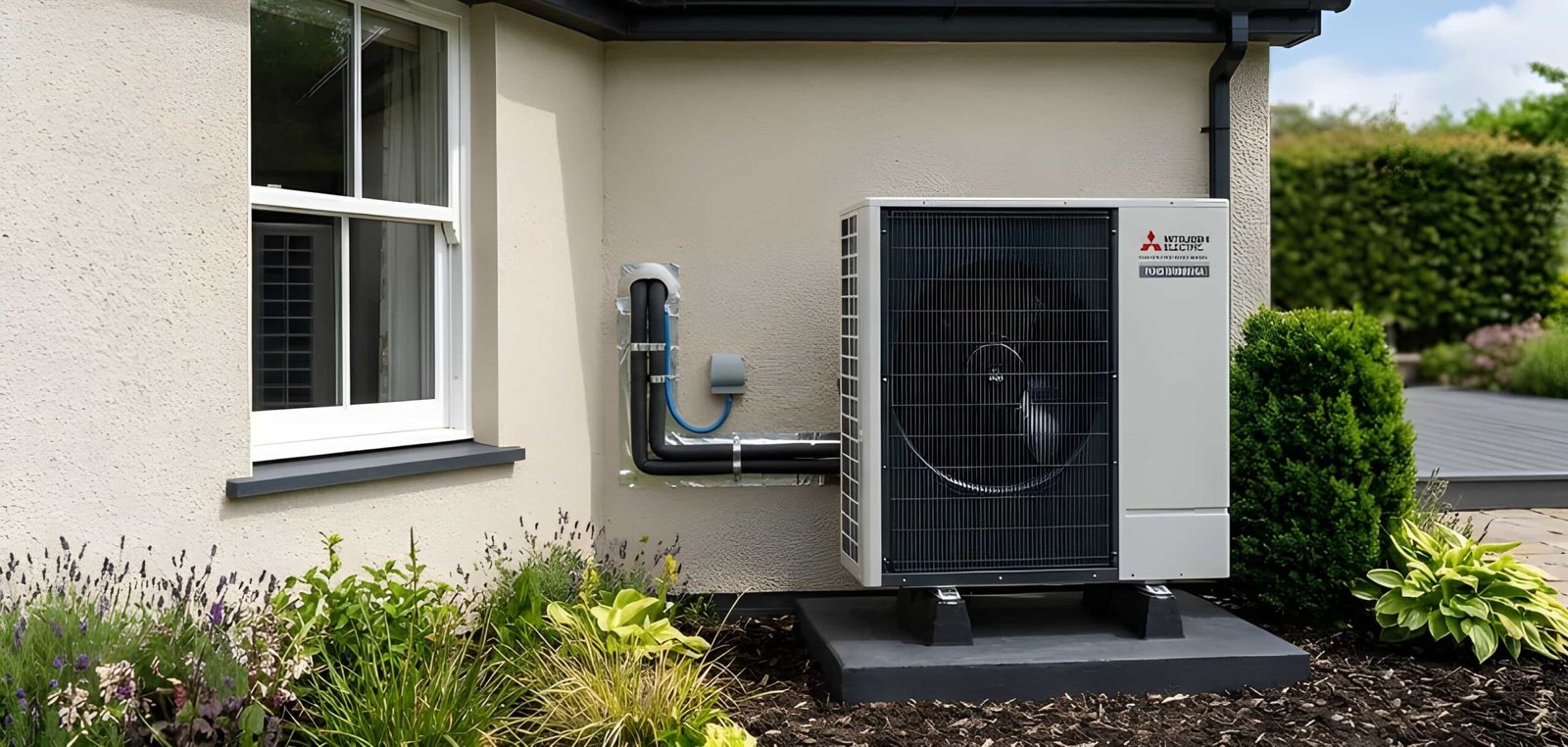
Heat Pump Size by Square Footage
Evaluating heat pump size by square footage provides a useful initial starting point for preliminary planning, but it cannot by itself determine the correct equipment capacity for your home. While homeowners frequently search for a simple square-footage rule, actual heating and cooling requirements depend heavily on dynamic variables such as climate severity, insulation levels, window performance, ceiling heights, home age, building envelope tightness, and regional design temperatures.
Because a heat pump provides both air conditioning during warm summer months and efficient heating during the winter, getting the right capacity ensures your system maintains indoor comfort without short-cycling or struggling against extreme weather conditions. For a more comprehensive evaluation, you can reference our primary Heat Pump Sizing Calculator.
How Much Heat Pump Capacity Do I Need per Square Foot?
There is no universal rule where every 500 square feet requires a rigid number of BTUs. Instead, general rules of thumb serve only as preliminary baselines. A standard baseline load calculation often starts around 25 BTU/hr per square foot for typical cooling loads, but this figure scales significantly based on your local climate and physical structure:
- Climate Severity: Homes in very cold regions demand higher heating capacities relative to floor area than homes in moderate or warm climates.
- Insulation & Building Envelope: Premium attic insulation, double- or triple-pane windows, and tight air sealing dramatically reduce thermal loss and gain.
- Ceiling Height & Volume: Standard calculations assume 8-foot ceilings; vaulted or high ceilings increase total conditioned volume, requiring higher capacity.
- Equipment Performance: Modern cold-climate heat pumps maintain capacity at lower outdoor design temperatures, influencing equipment selection.
Quick Heat Pump Size by Square Footage
Common Heat Pump Sizes by Home Square Footage
To help contextualize standard equipment sizing, the reference table below outlines illustrative ranges for common home sizes. These figures demonstrate how varying climate and insulation profiles alter the required capacity for specific square footage tiers, addressing common questions such as what size heat pump is needed for 1,000, 1,500, 2,000, 2,500, or 3,000 square feet.
| Home Square Footage | Illustrative Heat Pump Size Range | Approximate Nominal BTU/hr Capacity |
|---|---|---|
| 500 sq ft | 1.5 Tons | ≈ 18,000 BTU/hr |
| 750 sq ft | 1.5 – 2.0 Tons | ≈ 18,000 – 24,000 BTU/hr |
| 1,000 sq ft | 2.0 Tons | ≈ 24,000 BTU/hr |
| 1,250 sq ft | 2.0 – 2.5 Tons | ≈ 24,000 – 30,000 BTU/hr |
| 1,500 sq ft | 2.5 Tons | ≈ 30,000 BTU/hr |
| 1,750 sq ft | 2.5 – 3.0 Tons | ≈ 30,000 – 36,000 BTU/hr |
| 2,000 sq ft | 3.0 Tons | ≈ 36,000 BTU/hr |
| 2,500 sq ft | 3.5 Tons | ≈ 42,000 BTU/hr |
| 3,000 sq ft | 4.0 Tons | ≈ 48,000 BTU/hr |
| 3,500 sq ft | 4.0 – 5.0 Tons | ≈ 48,000 – 60,000 BTU/hr |
| 4,000 sq ft | 5.0+ Tons (or Multi-Zone) | ≈ 60,000+ BTU/hr |
Heat Pump Tons and BTUs Explained
When exploring a heat pump size chart or evaluating equipment options, manufacturers rate capacity in terms of tons and BTUs (British Thermal Units) per hour. In HVAC terminology, capacity conversions follow standard nominal benchmarks:
- 1 Ton ≈ 12,000 BTU/hr
- 1.5 Tons ≈ 18,000 BTU/hr
- 2 Tons ≈ 24,000 BTU/hr
- 2.5 Tons ≈ 30,000 BTU/hr
- 3 Tons ≈ 36,000 BTU/hr
- 3.5 Tons ≈ 42,000 BTU/hr
- 4 Tons ≈ 48,000 BTU/hr
- 5 Tons ≈ 60,000 BTU/hr
It is essential to recognize that these figures represent nominal capacity conversions rather than direct square-footage recommendations. For example, determining what size heat pump you need for a 2,000 sq ft home or a 3,000 sq ft home requires analyzing peak heating and cooling loads alongside local winter and summer design temperatures to ensure optimal energy efficiency and long-term reliability.
Embed This Heat Pump Size Tool
Copy the HTML code below to embed this interactive estimator on your website or blog.
How Many BTUs Does a Heat Pump Need?
Determining how many BTUs a heat pump needs requires analyzing your home's comprehensive heating and cooling loads rather than relying on a generic rule of thumb. When utilizing a professional heat pump BTU calculator, the required capacity accounts for regional climate profiles, insulation performance, window ratings, and building envelope tightness. Nominal capacity values—frequently expressed in tons or BTU/hr—provide a standardized benchmark, but actual operational performance depends heavily on outdoor weather conditions.
Whether you are assessing equipment capacity for a compact home or evaluating what size is necessary for a larger layout (such as a 1,500 sq ft, 2,000 sq ft, or 2,500 sq ft house), understanding the distinction between cooling output, heating output, and nominal tonnage ensures optimal indoor comfort. For a comprehensive system sizing analysis, refer back to our main Heat Pump Sizing Calculator.
How Heat Pump BTUs Are Measured
BTU/hr (British thermal units per hour) measures the rate at which equipment removes heat (during cooling operations) or adds heat (during heating operations). In the HVAC industry, heat pump capacity is traditionally described using both BTU/hr and nominal tons. Specifically, 1 ton of nominal cooling capacity is equivalent to approximately 12,000 BTU/hr. This conversion relationship establishes standard sizing increments, helping homeowners transition easily from tonnage specifications to thermal output requirements.
Quick Heat Pump BTU Estimate
Heat Pump BTU to Ton Conversion
To easily cross-reference equipment models on a specification sheet, the standard conversion table below outlines nominal capacity ratings across standard tonnage tiers. These values serve as structural benchmarks rather than standalone equipment sizing guarantees for any particular building.
| Heat Pump Size | Nominal Capacity |
|---|---|
| 1 ton | 12,000 BTU/hr |
| 1.5 tons | 18,000 BTU/hr |
| 2 tons | 24,000 BTU/hr |
| 2.5 tons | 30,000 BTU/hr |
| 3 tons | 36,000 BTU/hr |
| 3.5 tons | 42,000 BTU/hr |
| 4 tons | 48,000 BTU/hr |
| 5 tons | 60,000 BTU/hr |
Heating BTUs vs. Cooling BTUs
A critical factor in heat pump engineering is that cooling capacity and heating capacity perform differently under changing environmental conditions. While cooling capacity is generally consistent under standard summer ratings, heating capacity fluctuates as outdoor temperatures drop. For instance, a system rated with a nominal 36,000 BTU/hr capacity may experience variable output during extreme winter weather depending on whether it is a standard model or an advanced cold-climate unit. Consequently, checking equipment performance data at local outdoor design temperatures is vital.
Why the Required BTUs Can Vary
Attempting to answer how many BTUs a heat pump needs for specific layouts—such as a 1,000 sq ft, 2,000 sq ft, or 3,000 sq ft home—illustrates why rules of thumb have limitations. Variations in ceiling height, regional climate intensity, window orientation, and thermal envelope quality mean that two identically sized houses can require completely different equipment configurations. Professional sizing bridges this gap by calculating precise structural loads.
Embed This Heat Pump BTU Tool
Copy the HTML code below to embed this interactive estimator on your website or blog.
Heat Pump Size Chart
A heat pump size chart provides a quick reference for understanding nominal equipment sizes, cooling tonnage capacity, and standard BTU/hr ratings. While this chart is essential for cross-referencing equipment specifications, a nominal size reference chart alone cannot determine the exact system capacity required for a specific residence.
Heat Pump Size Chart in Tons and BTUs
| Heat Pump Size | Nominal Capacity | Approximate BTU/hr |
|---|---|---|
| 1 ton | 1 ton | 12,000 BTU/hr |
| 1.5 tons | 1.5 tons | 18,000 BTU/hr |
| 2 tons | 2 tons | 24,000 BTU/hr |
| 2.5 tons | 2.5 tons | 30,000 BTU/hr |
| 3 tons | 3 tons | 36,000 BTU/hr |
| 3.5 tons | 3.5 tons | 42,000 BTU/hr |
| 4 tons | 4 tons | 48,000 BTU/hr |
| 5 tons | 5 tons | 60,000 BTU/hr |
Quick Heat Pump Size Reference
What Do Heat Pump Tons Mean?
In HVAC terminology, a "ton" measures a nominal rate of cooling capacity rather than the physical weight of the equipment. One ton corresponds to approximately 12,000 BTU/hr of heat removal. For example, a 3-ton heat pump provides a nominal cooling capacity of 36,000 BTU/hr, while larger homes utilize 4-ton or 5-ton systems.
Does Heat Pump Tonnage Equal Heating Capacity?
Nominal cooling capacity is not necessarily identical to actual heating capacity. Heat pump performance fluctuates based on outdoor temperatures, equipment models, and manufacturer design data. A unit rated at a specific nominal tonnage can deliver varying thermal output during severe winter weather compared to standard summer cooling conditions.
Furthermore, heat-pump capacity cannot be assigned safely from square footage alone, as two homes of identical floor area can experience vastly different thermal loads due to climate variations, insulation quality, window efficiency, and building tightness. For a comprehensive analysis tailored to your property, utilize our complete Heat Pump Sizing Calculator.
Embed This Heat Pump Size Tool
Copy the HTML code below to embed this interactive reference tool on your website or blog.
How Heat Pump Sizing Is Calculated
Understanding how heat pump sizing is calculated requires examining the complex thermal dynamics of a home rather than relying on generalized rules of thumb. Professional heat pump sizing is a rigorous engineering process designed to match equipment capacity precisely with a building's heating and cooling loads under varying weather extremes.
Estimate the Heating Load
The heating load represents the exact amount of heat a home loses to the outdoor environment under specific winter design conditions. Professional calculations look well beyond simple square footage, analyzing a comprehensive set of structural parameters, including:
- Home size and layout configuration
- Regional climate and outdoor heating design temperatures
- Insulation levels in walls, floors, and attics
- Window and exterior door performance ratings and orientation
- Ceiling height and number of stories
- Building age, construction type, and envelope air tightness
- Indoor design temperature preferences
Rather than using a generic multiplier, accredited HVAC professionals utilize building heat-loss formulas. The industry-recognized standard methodology for residential heating and cooling load calculations is known as Manual J. (Note: The calculation tools provided on this page offer educational estimates and do not constitute a certified Manual J engineering report.)
Estimate the Cooling Load
Heat pump sizing must simultaneously account for summer cooling requirements. The cooling load calculation measures the rate at which heat enters the building through solar radiation, ambient outdoor air infiltration, and internal heat sources. Important variables include:
- Outdoor cooling design temperatures
- Solar heat gain through windows and roofing
- Overall building thermal mass and insulation efficiency
- Ductwork location and leakage factors
Because a home's heating and cooling loads are rarely identical, a heat pump must be evaluated against both operating requirements. Relying on a single universal BTU-per-square-foot factor often results in mismatched equipment performance.
Compare the Heating and Cooling Requirements
Once both loads are calculated, the required equipment capacity is dictated by whichever operating mode demands more capacity under local design conditions. A common misconception is that choosing the largest available unit provides a safety margin. In practice, oversizing a heat pump leads to short-cycling, where the compressor turns on and off too frequently. This causes uneven indoor temperatures, excessive indoor humidity, premature equipment wear, and higher operating costs. Conversely, undersizing leaves the home inadequately conditioned during peak weather extremes.
Account for Outdoor Temperature and Heat Pump Performance
Unlike traditional combustion furnaces, a heat pump's heating capacity changes as the outdoor temperature drops. The nominal tonnage of a heat pump does not necessarily equal its actual heating output at lower ambient temperatures. Reviewing manufacturer performance data at local outdoor design temperatures is essential to understand low-temperature performance, capacity modulation, and whether supplemental heating sources will be required.
Consider Auxiliary or Backup Heat
When a heat pump's heating capacity drops below the home's heating load during severe winter weather, auxiliary or backup heat is engaged to bridge the gap. This supplemental energy can come from electric resistance backup strips, a dual-fuel gas furnace setup, or modern cold-climate heat pump technologies designed to maintain higher capacities in sub-freezing weather.
Convert the Required Capacity Into a Heat Pump Size
Heat pump capacity is traditionally expressed in BTU/hr or nominal tons, where 1 ton equals approximately 12,000 BTU/hr of nominal cooling capacity. Tonnage is a nominal rating and does not directly equate to continuous heating output.
| Nominal Size | Approximate Cooling Capacity |
|---|---|
| 1 ton | 12,000 BTU/hr |
| 1.5 tons | 18,000 BTU/hr |
| 2 tons | 24,000 BTU/hr |
| 2.5 tons | 30,000 BTU/hr |
| 3 tons | 36,000 BTU/hr |
| 3.5 tons | 42,000 BTU/hr |
| 4 tons | 48,000 BTU/hr |
| 5 tons | 60,000 BTU/hr |
Quick Heat Pump Sizing Calculation
To perform a thorough evaluation for your specific home layout, access our complete Heat Pump Sizing Calculator.
Embed This Tool
Copy the HTML code below to embed this tool on your website or blog.
Heat Pump Heating Capacity vs. Outdoor Temperature
A residential heat pump does not necessarily deliver the same heating output at every outdoor temperature. When evaluating thermal performance, it is vital to distinguish between nominal equipment size, rated heating capacity, and the actual heating capacity delivered at a particular outdoor temperature. Ambient temperature remains one of the most significant variables influencing heat pump performance in cold weather.
Why Does Heat Pump Capacity Change With Outdoor Temperature?
Air-source heat pumps work by absorbing heat from ambient outdoor air and transferring it indoors. As outdoor air temperatures drop, thermal energy available in the air decreases, causing both the heating capacity and operational efficiency of the system to shift. However, this is not a universal fixed rule; the rate at which capacity changes varies considerably based on:
- Specific heat pump model and compressor technology
- Inverter-driven modulation and variable-speed capabilities
- Refrigerant formulation and coil design
- Outdoor weather conditions and local humidity levels
- Published manufacturer specifications
Heat Pump Heating Capacity at Different Outdoor Temperatures
To conceptualize how thermal output shifts under varying weather conditions, consider the general behavior outlined below. This conceptual framework illustrates relative trends rather than exact manufacturer-specific figures.
| Outdoor Temperature | Illustrative Heating Capacity Behavior |
|---|---|
| 50°F | Near rated capacity; highly efficient operation |
| 40°F | Strong capacity with optimal coefficient of performance |
| 30°F | Moderate capacity reduction may occur depending on unit type |
| 20°F | Notable capacity reduction requiring proper sizing adjustments |
| 10°F | Greater low-temperature performance demand on standard units |
| 0°F | Model-specific cold-weather performance becomes critical |
Nominal Heat Pump Size vs. Actual Heating Output
In HVAC conventions, 1 ton equals approximately 12,000 BTU/hr of nominal cooling capacity. However, a common mistake is assuming that a 3-ton heat pump always provides exactly 36,000 BTU/hr of heating output regardless of the weather. For instance, while a unit labeled as 3 tons has a nominal cooling rating of 36,000 BTU/hr, its available heating capacity at a freezing winter design temperature may be substantially lower. True equipment selection must rely on specific manufacturer performance data rather than nominal tonnage alone.
What Is a Heat Pump Design Temperature?
The heating design temperature represents a statistically derived cold outdoor condition for a specific geographic location, used when evaluating a home's peak heating requirements. Heat pump sizing must account for whether the chosen equipment can maintain adequate heating capacity at this local design temperature. Because climates vary dramatically by region, universal design standards do not apply across different geographic zones.
Why Cold-Climate Heat Pumps Are Different
Modern cold-climate heat pumps are engineered with advanced variable-speed compressors and enhanced vapor-injection technologies specifically to maintain high heating capacity at lower outdoor temperatures. While these systems can operate effectively in sub-freezing weather, their exact output remains model-dependent. Property owners should review detailed manufacturer charts covering:
- Heating capacity at specific low outdoor temperatures
- Coefficient of performance (COP) ratings across temperature ranges
- Minimum operating temperature limits
- Auxiliary or supplemental heat integration requirements
When Is Auxiliary Heat Needed?
When a heat pump's available heating capacity falls below the home's heating load during extreme cold snaps, supplemental heat is engaged. This can involve electric resistance backup coils, integrated furnace backups in dual-fuel configurations, or specialized cold-climate equipment designed to minimize backup utilization. Evaluating auxiliary heat needs requires matching calculated home heat loads against true equipment performance metrics.
Heat Pump Capacity at Different Outdoor Temperatures
To explore comprehensive sizing workflows and equipment parameters, visit our complete Heat Pump Sizing Calculator.
Embed This Tool
Copy the HTML code below to embed this tool on your website or blog.
Heat Pump Sizing for Cold Climates
Sizing a heat pump for a cold climate requires looking far beyond simple nominal tonnage rules. In regions characterized by harsh winter weather, heating performance must be carefully evaluated against the building's true heating load and severe outdoor design conditions. A system that delivers exceptional efficiency in a mild climate will not automatically satisfy heating requirements when temperatures plummet below freezing.
Why Cold-Climate Heat Pump Sizing Is Different
Colder outdoor environments simultaneously increase a home's thermal demand while altering the thermodynamic behavior of air-source equipment. Because ambient heat energy becomes scarce during winter storms and deep freezes, an unadjusted sizing approach can lead to underperformance. Proper evaluation requires analyzing:
- The home's specific heating load
- Local outdoor design temperatures
- True equipment heating capacity at low ambient points
- Low-temperature coefficient of performance (COP) and operating efficiency
- Capacity retention across freezing intervals
- Auxiliary or backup heating integration
Start With the Home's Heating Load
The foundational step in proper equipment selection is determining how much thermal energy a structure requires during peak winter conditions. Professional residential calculations incorporate multiple structural parameters, including conditioned floor area, thermal boundary insulation levels, window specifications, exterior door seals, ceiling heights, floor assemblies, and overall building air tightness. Estimating requirements based on square footage alone overlooks vital thermal envelope characteristics and can easily miscalculate actual system demands.
Choose Equipment Based on Low-Temperature Capacity
Cold-climate sizing mandates reviewing detailed manufacturer performance specifications rather than relying on nominal HVAC ratings. Designers must inspect rated heating output across varying outdoor temperature bands, evaluate operating efficiency profiles, verify minimum ambient operating thresholds, understand modulation ranges, and assess auxiliary heating thresholds to ensure complete winter reliability.
What Is a Cold-Climate Heat Pump?
Cold-climate models distinguish themselves from conventional air-source heat pumps through advanced engineering designed to sustain useful heating output in sub-freezing weather. These systems frequently leverage variable-speed inverter compressors, specialized refrigerant injection circuitry, and optimized coil management to maintain dependable thermal delivery when standard equipment experiences capacity degradation.
How Cold Weather Affects Heat Pump Sizing
The interaction between structural thermal loss, local climate severity, and available equipment output forms the core of cold-weather design. For example, a residence requires a specific thermal input at its local design temperature, and the chosen hardware must be verified to supply that exact output level under those exact conditions. Viewing sizing through simplistic nominal labels ignores the reality that actual heating output fluctuates dynamically with weather conditions.
Do Cold-Climate Heat Pumps Need Backup Heat?
Backup heating is not universally mandatory for every installation, but it serves as an important contingency during extreme cold snaps or system defrost cycles. Integration options include electric resistance auxiliary heating elements, integrated furnace backups, or dual-fuel configurations. Evaluating backup needs depends on local climate extremes, structural heating loads, and equipment performance margins.
How to Select the Right Cold-Climate Heat Pump Size
Selecting appropriate equipment follows a rigorous engineering sequence:
- Determine the home's heating load using rigorous methodologies like Manual J.
- Identify the local heating design temperature.
- Examine equipment heating capacity at that specific design temperature.
- Compare available thermal capacity against calculated structural requirements.
- Verify cooling season requirements alongside winter performance.
- Assess low-temperature coefficient ratings and auxiliary heating requirements.
- Finalize equipment selection using manufacturer performance data in accordance with Manual S standards.
For a broader overview of general sizing principles, explore our comprehensive Heat Pump Sizing Calculator.
Cold Climate Heat Pump Sizing Check
Embed This Tool
Copy the HTML code below to embed this tool on your website or blog.
Heat Pump vs. Furnace Sizing
A common and consequential misconception in residential HVAC is assuming that a heat pump and a furnace serving the same home must share identical nominal heating capacities. While both systems are engineered to satisfy a structure's heating load, their fundamental operating physics differ entirely. A furnace generates thermal energy via combustion or electric resistance elements, whereas a heat pump transfers thermal energy from the outdoors, causing its actual heating capacity to vary dynamically with outdoor weather conditions.
Is a Heat Pump the Same Size as a Furnace?
Not necessarily. Simply matching a heat pump's nominal BTU rating directly to an existing furnace's input rating frequently results in improper equipment sizing. Furnace input capacity and heat-pump heating capacity represent fundamentally different rating criteria:
- Furnaces: Evaluated by input BTU/hr, useful output BTU/hr, and Annual Fuel Utilization Efficiency (AFUE).
- Heat Pumps: Evaluated by nominal cooling capacity, rated heating capacity, and low-temperature thermal performance curves across shifting outdoor conditions.
Why Furnace Size and Heat Pump Size Can Differ
Because operating characteristics diverge, sizing requirements do not mirror one another. A properly operating furnace maintains a relatively stable thermal output determined by fuel input and efficiency. Conversely, an air-source heat pump's available heating output fluctuates as outdoor ambient temperatures fall. Consequently, a heat pump must be sized based on its actual capacity at local winter design temperatures rather than blindly matching a furnace label.
What If I Am Replacing a Furnace With a Heat Pump?
Reviewing an existing furnace's specification can provide historical baseline context, but it should never automatically dictate the size of a replacement heat pump. Older furnaces were frequently oversized to combat perceived comfort losses or poorly insulated structures. A reliable equipment transition follows a methodical engineering pathway:
- Calculate the home's actual heating load.
- Identify local outdoor design temperatures.
- Determine seasonal cooling requirements.
- Analyze heat pump heating performance curves at design conditions.
- Assess whether auxiliary or backup heat is necessary.
Heat Pump vs. Furnace BTU Ratings
Comparing specifications across equipment types requires understanding how metrics differ:
| Specification | Furnace | Heat Pump |
|---|---|---|
| Capacity Terminology | Input / Output BTU/hr | Nominal cooling BTU/hr & heating capacity |
| Heating Output | Influenced by fuel input and efficiency | Varies with outdoor temperature & conditions |
| Cold-Weather Capacity | Generally stable across operating range | Model-specific and temperature-dependent |
| Efficiency Rating | AFUE | COP / HSPF |
| Backup Heat | Usually not required | May be included depending on system design |
| Equipment Selection | Heating load + equipment data | Heating load + cooling load + performance data |
Heat Pump Sizing for Dual-Fuel Systems
A dual-fuel setup combines an electric heat pump with a fossil fuel furnace. The heat pump manages conditioning during mild and moderate weather, while the furnace steps in during severe cold snaps or defrost intervals. Sizing both components requires evaluating structural heating loads, equipment capacities at shifting temperatures, and local climate thresholds.
Should a Heat Pump Be Sized Larger Than a Furnace?
There is no universal rule dictating that a heat pump must be larger or smaller than a pre-existing furnace. Equipment must be selected strictly based on calculated loads and manufacturer performance data. Intentional oversizing to compensate for cold-weather drops introduces severe humidity control issues, short-cycling, and excessive wear.
Manual J and Manual S for Heat Pump and Furnace Sizing
Professional installations rely on established industry standards: Manual J calculates residential heating and cooling loads, while Manual S governs equipment selection based on those calculations and manufacturer performance specifications. For a comprehensive look at standalone sizing metrics, check our Heat Pump Sizing Calculator.
Heat Pump vs. Furnace Sizing Comparison
Existing Furnace Metrics (95% AFUE Model)
Illustrative Heat Pump Sizing
Embed This Tool
Copy the HTML code below to embed this tool on your website or blog.
Do I Need Auxiliary Heat With a Heat Pump?
Not necessarily. Many modern heat pumps can supply the vast majority or even all of a home's heating requirements under typical operating conditions. However, certain installations rely on auxiliary or backup heat when outdoor temperatures plunge or thermal demand exceeds the heat pump's instantaneous capacity. The actual requirement depends heavily on climate severity, structural heating loads, specific equipment performance profiles, and system design configuration.
What Is Auxiliary Heat on a Heat Pump?
Auxiliary heat refers to supplemental heating elements that activate alongside a heat pump whenever additional thermal capacity is required to maintain indoor comfort. Common configurations include electric resistance heat strips installed within an air handler or a fossil-fuel furnace integrated into a dual-fuel setup. Auxiliary heat operates as an intentional support mechanism and should never be misconstrued as a sign of mechanical equipment failure.
Does Cold Weather Mean I Need Auxiliary Heat?
Experiencing cold weather does not automatically mandate the use of auxiliary heat. Advanced cold-climate heat pumps are specifically engineered to retain high heating performance and useful thermal output at low ambient temperatures. Nevertheless, actual capacity varies significantly by model, making it crucial to review manufacturer performance data at relevant outdoor temperatures rather than assuming a unit maintains its nominal rating in a deep freeze.
When Does Auxiliary Heat Come On?
Auxiliary heat typically engages when the heat pump's available heating capacity falls short of the home's total heating demand. Contributing triggers include severe outdoor temperature drops, high thermal loads, temporary defrost cycles where the outdoor coil sheds frost, and specific thermostat configuration thresholds. Control logic and activation points vary widely across different system brands and installation standards.
What Is the Heat Pump Balance Point?
The balance point represents the specific outdoor temperature where a heat pump's maximum available heating capacity precisely matches the home's heating load. When ambient temperatures drop below this economic balance point, supplemental heat may become necessary depending on system controls. This threshold is not universal; it shifts based on home insulation, building size, equipment efficiency, and local climate conditions.
Auxiliary Heat vs. Emergency Heat
Understanding the terminology helps clarify how backup systems operate:
- Auxiliary Heat: Supplemental heating that triggers automatically or as part of normal system operation when extra capacity is required.
- Emergency Heat: A manual user-selected operating mode on many thermostats that locks out normal heat-pump operation entirely, forcing the system to run exclusively on backup heat.
Do Cold-Climate Heat Pumps Need Backup Heat?
While cold-climate heat pumps dramatically reduce reliance on supplemental heat, they do not universally eliminate it across every geographic region. The necessity depends upon local design temperatures, extreme weather events, and structural heat loss. Some homes utilize electric resistance backup strips, while others incorporate a gas or oil furnace in a dual-fuel arrangement.
How Heat Pump Sizing Affects Auxiliary Heat
Sizing decisions directly influence auxiliary heat frequency. Selecting a properly sized heat pump involves evaluating heating loads at design temperatures using rigorous methodologies like Manual J, while equipment selection follows Manual S guidelines. Intentionally oversizing a heat pump purely to bypass auxiliary heat is discouraged, as excessive capacity introduces short-cycling, humidity issues, and efficiency loss.
To evaluate baseline equipment requirements further, review our detailed Heat Pump Sizing Calculator.
Auxiliary Heat Requirement Check
Embed This Tool
Copy the HTML code below to embed this tool on your website or blog.

What Happens If a Heat Pump Is Too Big or Too Small?
Selecting the correct capacity for a heat pump is critical for maintaining home comfort, optimizing efficiency, and ensuring equipment longevity. When a system is mismatched to the structural load, various operational issues can emerge.
What Does It Mean for a Heat Pump to Be Too Big or Too Small?
An oversized heat pump has an available heating and cooling capacity that substantially exceeds the home's actual load requirements. Conversely, an undersized heat pump lacks the necessary output to sustain comfortable temperatures during peak weather conditions. Determining whether a system is too big or too small cannot be done reliably from square footage alone; it requires evaluating climate severity, insulation quality, window performance, infiltration rates, and specific design temperatures.
What Happens If a Heat Pump Is Too Big?
Oversizing a heat pump can introduce several sizing problems that impact everyday operation. When a unit is overly powerful, it can satisfy thermostat setpoints too quickly, leading to shorter operating cycles and frequent starts and stops. This phenomenon, often referred to as short cycling, can reduce overall system efficiency and lead to uneven temperature swings across different rooms. Additionally, in cooling mode, a system that shuts down too rapidly may fail to run long enough to properly dehumidify the indoor air, resulting in a clammy indoor environment.
What Happens If a Heat Pump Is Too Small?
An undersized heat pump faces the opposite set of challenges. Because its maximum heating and cooling capacity is lower than the structural load, the equipment must run for unusually long periods or operate continuously during peak outdoor conditions. During extreme winter weather, an undersized unit may struggle to maintain comfortable indoor temperatures on its own, forcing a greater reliance on auxiliary or backup heat sources, which can substantially increase operating costs.
Quick Heat Pump Sizing Check
Oversized vs. Undersized Heat Pumps
| Issue | Heat Pump Too Big | Heat Pump Too Small |
|---|---|---|
| Cycling | More frequent cycling may occur | Longer runtimes |
| Comfort | May reduce comfort in some conditions | May struggle during peak loads |
| Efficiency | May lose efficiency from cycling | Can require more backup heat |
| Humidity control | Can be reduced during cooling in some climates | Longer cooling runtimes may improve dehumidification |
| Cold-weather heating | Usually has more capacity than needed at some conditions | May need more auxiliary/backup heat |
| Equipment selection | May increase equipment cost | May require backup capacity |
| Main concern | Excess capacity | Insufficient peak capacity |
Why Variable-Speed Heat Pumps Are Different
Inverter-driven and variable-speed heat pumps alter how sizing issues manifest. Because these systems can modulate their compressor speed and refrigerant flow, they are capable of operating at lower outputs rather than running strictly at 100% capacity. This modulation helps reduce short cycling compared to fixed-capacity equipment. However, variable-speed systems still possess a minimum operating capacity floor. If a system is drastically oversized, even its lowest modulation tier may exceed the home's baseline load during mild weather, meaning proper equipment sizing remains essential.
How Heating and Cooling Loads Affect Heat Pump Size
Selecting equipment requires balancing both heating and cooling loads, which do not always scale identically. A home may require substantial cooling capacity during humid summers but have moderate heating demands, or vice versa. Evaluating manufacturer performance data across outdoor design temperatures ensures that the chosen heat pump meets peak requirements without introducing severe inefficiencies.
For a comprehensive look at required system capacity based on your building parameters, explore our Heat Pump Sizing Calculator.
Why Proper Heat Pump Sizing Matters
Proper sizing prevents equipment strain, optimizes energy performance, and stabilizes indoor temperatures. Relying on professional load calculation protocols like Manual J and equipment selection guidelines like Manual S ensures that a heat pump is neither excessively large nor inadequate for the home's specific thermal demands.
Embed This Tool
Copy the HTML code below to embed this tool on your website or blog.
Heat Pump Tonnage Explained
Heat pump tonnage is a measure of nominal capacity, not the physical weight of the equipment. A "ton" is an HVAC capacity term where one ton of cooling capacity is approximately 12,000 BTU/hr. Heat pump tonnage is commonly used to describe nominal cooling capacity, meaning a 3-ton heat pump has approximately 36,000 BTU/hr of nominal cooling capacity. However, a 3-ton heat pump does not necessarily deliver that exact figure in heating mode under all conditions.
What Does a Ton Mean on a Heat Pump?
Historically, the term "ton" in heating and air conditioning originates from the cooling effect produced by melting one short ton (2,000 pounds) of ice over a 24-hour period. This standard translates to roughly 12,000 BTU/hr.
For beginners, it is important to clarify that "ton" does not mean:
- The physical equipment weighs one ton
- The unit consumes 12,000 BTU of electricity
- The unit always produces exactly 12,000 BTU/hr of heat
Quick Heat Pump Tonnage Converter
Heat Pump Tons to BTU/hr
| Heat Pump Size | Nominal Capacity (Nominal cooling capacity) |
|---|---|
| 1 ton | 12,000 BTU/hr |
| 1.5 tons | 18,000 BTU/hr |
| 2 tons | 24,000 BTU/hr |
| 2.5 tons | 30,000 BTU/hr |
| 3 tons | 36,000 BTU/hr |
| 3.5 tons | 42,000 BTU/hr |
| 4 tons | 48,000 BTU/hr |
| 5 tons | 60,000 BTU/hr |
These figures represent standard capacity references, though actual equipment ratings can vary slightly by model and manufacturer specifications.
Why Is Heat Pump Tonnage Based on Cooling Capacity?
HVAC tonnage historically describes cooling capacity. For heat pumps, the same nominal tonnage is commonly used to describe the equipment's cooling capacity. However, heating capacity is a separate performance specification. A heat pump's heating capacity can vary according to:
- Outdoor temperature
- Equipment model
- Operating conditions
- Indoor/outdoor conditions
- Manufacturer rating point
- System configuration
Does a 3-Ton Heat Pump Provide 36,000 BTU/hr of Heat?
Not necessarily. While 3 tons corresponds to approximately 36,000 BTU/hr of nominal cooling capacity, heating capacity is model-specific and can change as outdoor temperature changes. Users should check the manufacturer's performance data for heating capacity at the relevant outdoor design temperature.
Nominal Capacity vs. Actual Capacity
To evaluate performance accurately, it helps to distinguish between different capacity terms:
- Nominal capacity: The standard capacity category used to identify equipment size, such as 2, 3, or 4 tons.
- Rated capacity: The capacity measured under a specified laboratory or rating condition.
- Actual operating capacity: The capacity delivered under the specific operating conditions at a particular outdoor temperature.
Heat Pump Tons vs. BTU/hr
Tons are a convenient HVAC capacity category, while BTU/hr expresses the actual rate of heat transfer. Specifically, 1 ton $\approx$ 12,000 BTU/hr, 3 tons $\approx$ 36,000 BTU/hr, and 5 tons $\approx$ 60,000 BTU/hr. This conversion serves primarily as a nominal cooling-capacity reference.
Common Heat Pump Tonnages
Residential systems commonly fall into nominal categories such as 1.5 tons, 2 tons, 2.5 tons, 3 tons, 3.5 tons, 4 tons, and 5 tons. Choosing tonnage should not be based only on home square footage, the size of an existing air conditioner, or the size of an existing furnace. Proper equipment selection considers heating load, cooling load, climate, design temperatures, insulation, windows, building characteristics, and heat pump performance data.
To review detailed building requirements, check our Heat Pump Sizing Calculator.
Embed This Tool
Copy the HTML code below to embed this tool on your website or blog.
Heat Pump Sizing Examples
Heat pump sizing examples are useful for understanding the calculation process, but real equipment selection depends on the home's actual heating and cooling loads. Square footage alone does not determine the correct heat pump size. Two homes with identical floor areas can require completely different capacities depending on regional climate, insulation levels, window efficiency, ceiling height, and overall building tightness. Furthermore, a heat pump's heating capacity changes with outdoor temperature, requiring careful evaluation against local design temperatures.
Example 1 — 1,000 sq ft Efficient Home
Home conditions:
- Home size: 1,000 sq ft
- Climate: Moderate
- Insulation: Good
- Ceiling height: 8 ft
- Building condition: Relatively tight envelope
Illustrative load estimate:
- Heating load: Approximately 22,000 BTU/hr
- Cooling load: Approximately 20,000 BTU/hr
Illustrative equipment consideration:
- Nominal heat-pump size: Around 2 tons (approx. 24,000 BTU/hr nominal capacity)
Why this result differs: Because the climate is moderate and the building envelope is well-insulated, thermal loss and gain remain low relative to floor area, allowing a smaller nominal capacity to handle both heating and cooling requirements comfortably.
Example 2 — 1,500 sq ft Average Home
Home conditions:
- Home size: 1,500 sq ft
- Climate: Cold
- Insulation: Average
- Ceiling height: 8 ft
- Building condition: Typical windows and standard tightness
Illustrative load estimate:
- Heating load: Approximately 45,000 BTU/hr
- Cooling load: Approximately 35,000 BTU/hr
Illustrative equipment consideration:
- Nominal heat-pump size: Around 3.5–4 tons
Why this result differs: Colder regional winter temperatures increase the building's thermal heat loss significantly. While a 3.5 or 4-ton system has 42,000 to 48,000 BTU/hr of nominal cooling capacity, its actual delivered heating capacity at lower outdoor design temperatures must be verified against manufacturer specification data to ensure adequate performance without excessive auxiliary heat reliance.
Example 3 — 2,000 sq ft Average Home
Home conditions:
- Home size: 2,000 sq ft
- Climate: Cold
- Insulation: Average
- Ceiling height: 8 ft
- Building condition: Average building tightness
Illustrative load estimate:
- Heating load: Approximately 60,000 BTU/hr
- Cooling load: Approximately 50,000 BTU/hr
Illustrative equipment consideration:
- Nominal heat-pump size: Around 4–5 tons
Why this result differs: Standard insulation combined with a colder winter climate pushes the heating load higher. A 5-ton system provides 60,000 BTU/hr of nominal cooling capacity, but careful load matching is required to avoid oversizing during milder shoulder seasons.
Example 4 — 2,500 sq ft Efficient Home
Home conditions:
- Home size: 2,500 sq ft
- Climate: Moderate
- Insulation: Good
- Ceiling height: 9 ft
- Building condition: Tight building envelope
Illustrative load estimate:
- Heating load: Approximately 55,000 BTU/hr
- Cooling load: Approximately 45,000 BTU/hr
Illustrative equipment consideration:
- Nominal heat-pump size: Around 4 tons (approx. 48,000 BTU/hr nominal capacity)
Why this result differs: Although the home has a larger floor plan and taller 9-foot ceilings, superior insulation and a tight construction envelope curb overall heat transfer, keeping capacity requirements moderate for the square footage.
Example 5 — 3,000 sq ft Cold-Climate Home
Home conditions:
- Home size: 3,000 sq ft
- Climate: Very Cold
- Insulation: Average
- Ceiling height: 9 ft
- Building condition: Older windows
Illustrative load estimate:
- Heating load: Approximately 90,000 BTU/hr
- Cooling load: Approximately 60,000 BTU/hr
Illustrative equipment consideration:
- Nominal heat-pump size: Above standard residential single-system limits (professional sizing recommended)
Why this result differs: Severe winter conditions, combined with older windows and higher ceilings, create a massive heating demand. A single standard residential heat pump capped at 5 tons (60,000 BTU/hr nominal cooling) would typically be insufficient for the heating load alone, often necessitating multi-zone configurations, dual-fuel setups, or auxiliary heating systems.
Summary Comparison Table
| Home Conditions | Heating Load (BTU/hr) | Cooling Load (BTU/hr) | Illustrative Nominal Size |
|---|---|---|---|
| 1,000 sq ft / Moderate / Good | ~22,000 | ~20,000 | ~2 tons |
| 1,500 sq ft / Cold / Average | ~45,000 | ~35,000 | ~3.5–4 tons |
| 2,000 sq ft / Cold / Average | ~60,000 | ~50,000 | ~4–5 tons |
| 2,500 sq ft / Moderate / Good | ~55,000 | ~45,000 | ~4 tons |
| 3,000 sq ft / Very Cold / Average | ~90,000 | ~60,000 | Professional sizing recommended |
These figures are hypothetical educational examples and should not be used to select equipment for an actual home.
Why Two Homes With the Same Square Footage Can Need Different Heat Pumps
Consider two hypothetical 2,000 sq ft homes located in different environments. Home A sits in a moderate climate featuring high-performance insulation, tight construction, efficient windows, and standard 8-foot ceilings. Home B sits in a very cold climate with average insulation, older double-pane windows, a less-tight building envelope, and taller 9-foot ceilings. Despite sharing the exact same floor area, Home B experiences significantly greater thermal heat loss during winter, often demanding a substantially larger heat pump capacity or auxiliary heating support compared to Home A.
Why Heating and Cooling Loads Can Point to Different Capacities
A heat pump evaluates both heating and cooling requirements, but these two loads rarely match perfectly. Internal heat gains from appliances, lighting, and solar radiation increase the cooling load, whereas outdoor winter extremes dictate the heating load. Furthermore, a heat pump's actual heating output declines as outdoor temperatures drop. Equipment selection must balance performance across both operating modes rather than relying on a single metric.
Quick Heat Pump Sizing Example
Embed This Tool
Copy the HTML code below to embed this tool on your website or blog.
Frequently Asked Questions About Heat Pump Sizing
Proper heat pump sizing is critical for maximizing energy efficiency, comfort, and equipment longevity. We have assembled 20 detailed answers to the most crucial heat pump sizing and load calculation questions.
Explore key protocols like Manual J, Manual S, and Manual D, tonnage calculations, climate factors, and the risks of incorrect sizing.
Heat pump sizing is the process of determining the exact heating and cooling capacity required for a home to maintain comfortable temperatures efficiently.
Proper sizing ensures optimal energy efficiency, lower utility bills, extended equipment lifespan, and balanced indoor humidity control.
A Manual J calculation is an industry-standard protocol established by the Air Conditioning Contractors of America (ACCA) to determine a building's precise heating and cooling load.
It accounts for square footage, insulation levels, window orientation, local climate, and airtightness to eliminate guesswork in equipment selection.
No, sizing a heat pump purely by square footage (e.g., tons per 500 square feet) is an outdated rule of thumb that frequently leads to severe oversizing or undersizing.
Factors like climate zone, ductwork condition, window quality, and insulation heavily impact thermal loads and cannot be captured by square footage alone.
An oversized heat pump short-cycles, meaning it turns on and off too frequently.
This causes excessive wear and tear on components, uneven indoor temperatures, higher electricity bills, and poor moisture removal, leading to damp or clammy indoor conditions.
An undersized heat pump will struggle to maintain comfortable temperatures during peak winter cold or summer heat waves.
It runs almost continuously, driving up electricity consumption and failing to satisfy thermostat setpoints.
A 'ton' in HVAC terms does not refer to weight; it measures heat transfer capacity.
One ton equals 12,000 BTUs (British Thermal Units) per hour of cooling or heating capacity removed or delivered.
Climate zones dictate heating and cooling load ratios.
Homes in colder northern climates require higher heating capacity relative to cooling, whereas southern climates demand significantly more cooling capacity and moisture management.
Manual S is the ACCA standard used to select specific heat pump equipment matching the loads calculated in Manual J.
It ensures that the selected unit's actual performance data aligns with design conditions rather than relying solely on nominal ratings.
Manual D is the ACCA standard for designing residential duct systems.
Proper duct design is crucial for heat pumps because incorrect duct sizing or excessive static pressure restricts airflow, reducing efficiency and equipment lifespan.
Higher levels of wall, attic, and floor insulation reduce heat loss in winter and heat gain in summer.
Upgrading insulation before sizing a heat pump allows you to install a smaller, less expensive, and more efficient unit.
Windows and doors are major thermal weak points in any home.
Double- or triple-pane glass, low-E coatings, and shading significantly reduce solar heat gain and conductive heat loss, lowering the overall tonnage required for the heat pump.
Yes, variable-speed compressors modulate their output from roughly 25% to 100% to match real-time loads.
While proper sizing remains important, inverter technology handles slight oversizing much better than traditional single-stage systems.
Many state and municipal building codes now mandate Manual J and Manual S calculations for new construction and major HVAC replacements.
These requirements ensure energy efficiency compliance and prevent substandard or oversized installations.
If you plan to finish an attic, add a room addition, or replace single-pane windows soon, discuss these plans with your HVAC contractor.
Factoring future upgrades prevents your new heat pump from becoming undersized as your conditioned square footage expands.
Sensible heat refers to direct temperature changes measured by a thermometer, while latent heat involves moisture in the air.
Proper sizing accounts for both ratios to ensure precise temperature control and effective dehumidification during humid summer months.
Yes. Because oversized units short-cycle, they turn off before running long enough to pull moisture out of the air.
High indoor humidity combined with stagnant air creates an ideal environment for mold growth and mildew formation.
Look for contractors certified by organizations like ACCA, NATE (North American Technician Excellence), or BPI (Building Performance Institute).
Always ask if they perform computer-generated Manual J load calculations rather than relying on rough estimates.
The balance point is the outdoor temperature at which the heat pump's heating capacity exactly equals the home's heat loss.
Below this temperature, supplemental or backup heating (such as electric strip heaters) is required to maintain comfort.
Yes. South- and west-facing homes receive intense solar radiation during summer afternoons, increasing cooling loads.
Trees, overhangs, and neighboring buildings can reduce solar gain and lower cooling capacity requirements.
While not always mandatory, a blower door test measures a home's air leakage rate with high precision.
Incorporating precise infiltration data into a Manual J calculation eliminates guesswork and prevents drastic oversizing.
No matching questions found
Try searching for a different keyword or browse all categories above.
Ready to Size Your Heat Pump Correctly?
Use our advanced sizing calculators and load estimators to determine the ideal system capacity for your home's unique specifications.
Calculate Your Heat Pump SizeTrusted Industry & Government Sources
Our guidance, data models, and specifications are built upon verified insights from leading federal agencies, independent research labs, and certified HVAC standards institutions.
AHRI Certification is one of the HVAC industry's most trusted independent verification programs. Equipment bearing an AHRI Certified® rating has been tested to confirm that its published heating and cooling performance matches real-world laboratory results. Throughout Calculante, whenever efficiency ratings or equipment performance are discussed, AHRI-certified data is used whenever available to help homeowners make informed purchasing decisions.
Related HVAC & Home Calculators
Compare alternative system upgrades, estimate related home improvement costs, and plan your energy efficiency improvements with our suite of tools.
Heat Pump vs. Gas Furnace Cost Calculator
Compare operating expenses, climate efficiencies, and lifetime utility savings between dual-fuel, heat pump, and gas furnace setups.
Launch Calculator →Water Heater Replacement Cost Calculator
Estimate tankless vs. traditional tank water heater installation expenses, local permits, and yearly energy bill reductions.
Launch Calculator →Attic & Wall Insulation Cost Calculator
Calculate blown-in, spray foam, or batt insulation pricing by square footage and find out how much it decreases your HVAC load.
Launch Calculator →Solar Panel System & Battery ROI Calculator
Pair your new heat pump or HVAC system with solar power generation estimates, federal tax credits, and net-metering forecasts.
Launch Calculator →