
Bathroom Remodel Cost Calculator
Estimate your bathroom remodeling costs by project size, bathroom type, materials, fixtures, labor, and finishes. Compare realistic renovation budgets and build a more accurate bathroom remodel cost estimate for your project.
Share of your estimated total by cost category.
Actual contractor bids may differ because of local labor markets, material selections, site conditions, hidden damage, and project-specific requirements.
Get free estimates from qualified bathroom remodeling professionals near you.
Bathroom Remodel Cost Calculator: How Much Does a Bathroom Remodel Cost?
A standard bathroom renovation cost typically ranges from $6,500 to $25,000 for most residential projects nationwide, with the average bathroom remodel cost landing around $11,500 to $15,000 for a standard mid-range update. However, total bathroom remodeling expenses can span from a few thousand dollars for simple cosmetic refreshes up to $40,000 or more for luxury primary bathroom overhauls.
Because every home and layout is unique, overall bathroom remodel prices fluctuate substantially based on physical floor space, material grades, fixture selections, professional labor rates, and whether your project involves moving plumbing lines or electrical configurations. Understanding these broad planning tiers helps set realistic expectations before diving into specific material or labor choices.
General Bathroom Remodeling Cost Ranges
To help frame your planning budget, projects are typically categorized into three main tiers based on scale and finish quality:
Basic / Cosmetic Remodel
Ideal for refreshing existing layouts without structural or plumbing alterations.
- Fresh wall paint & trim work
- New vanity, mirror, & hardware
- Simple faucet & toilet replacement
- Refinishing an existing tub
Mid-Range Remodel
The most common tier, replacing major worn components while keeping standard layouts.
- New flooring & tile surrounds
- Upgraded vanity with stone top
- New bathtub or shower insert
- Updated lighting & ventilation
High-End / Luxury Remodel
Extensive renovations featuring custom craftsmanship and premium, high-end materials.
- Custom cabinetry & dual sinks
- Custom walk-in tile shower & soaking tub
- High-end fixtures & heated flooring
- Significant layout or plumbing shifts
Note: Figures represent general U.S. market planning ranges. Actual contractor proposals vary depending on your geographic location, material choices, and specific project scope.
What Most Affects the Total Cost?
While numerous details shape a project estimate, several major variables exert the greatest influence on your total bathroom renovation cost:
Project Scope
Whether you are performing a surface refresh or a full down-to-studs gut renovation dictates labor and material requirements.
Bathroom Size
Compact powder rooms require fewer materials and less labor than spacious primary bathrooms or multi-fixture ensuites.
Materials & Finishes
Selecting standard builder-grade fixtures versus custom tile, quartz countertops, and designer hardware alters material expenses.
Professional Labor
Skilled tradespeople (plumbers, electricians, and tile setters) represent a major portion of project overhead.
Plumbing & Electrical
Relocating toilets, sinks, showers, or adding new electrical circuits adds complexity and increases costs.
Geographic Location
Local labor rates, regional contractor demand, and municipal permit fees cause prices to vary across different areas.
Remodel vs. Cosmetic Update: Impact on Your Budget
A critical factor in controlling your bathroom remodeling cost is layout retention. Keeping your existing sink, toilet, and shower in their current footprints avoids costly behind-the-wall plumbing modifications. Conversely, altering the room layout, moving drain lines, tearing down walls, or upgrading aging electrical wiring substantially increases project complexity, labor time, and overall expense.
Get Free Bathroom Remodeling Quotes
Get free quotes from trusted local bathroom remodeling professionals.
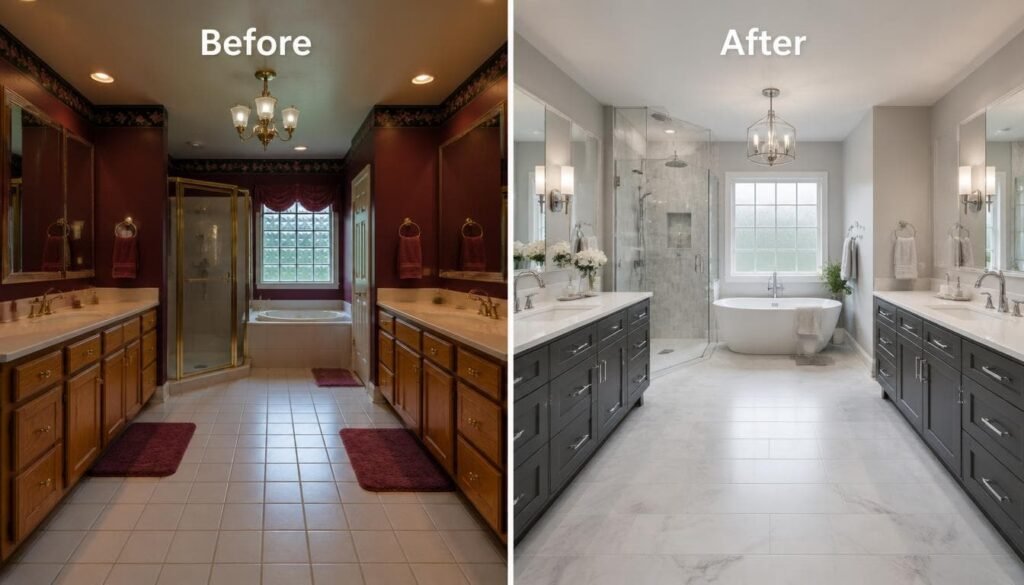
Bathroom Remodeling Cost by Bathroom Size
Bathroom size is a primary factor influencing a remodeling budget, but total square footage alone does not determine the final price. While larger rooms naturally require more raw flooring, paint, and tile materials, a compact space can still command a high price tag if the project involves extensive plumbing relocation, custom cabinetry, intricate tile work, or major structural adjustments.
Reviewing bathroom remodeling costs by room scale helps establish baseline planning expectations before assessing specific finish materials and labor rates.
Bathroom Size Categories & Planning Ranges
Bathroom layouts generally fall into four standard design classifications. The planning ranges below represent approximate U.S. residential averages for complete mid-range updates:
Small Bathroom
Typically half-baths or compact powder rooms featuring a single toilet and sink vanity.
Medium Bathroom
Standard full hallway bathrooms containing a combination shower-tub unit, toilet, and single vanity.
Large Bathroom
Spacious secondary baths featuring separated vanities, custom tiled showers, or standalone tubs.
Primary / Spacious
Master ensuites with dual sinks, walk-in custom glass showers, separate tubs, and premium finishes.
Note: Figures represent general planning ranges. Actual contractor quotes vary based on regional labor rates, structural conditions, and material grades.
What Bathroom Size Really Changes
As square footage increases, material quantities scale accordingly. A larger room demands more floor tile, wall paint, baseboard trim, and lighting fixtures. However, square footage is not the sole driver of a bathroom renovation cost. Specialized labor, fixture tiers, and plumbing layouts often have a more significant impact on the final invoice than room dimensions alone.
Square Footage vs. Project Scope
To understand why size does not tell the whole story, consider how project scope alters total expenditures:
Example A: Small Room, Deep Scope
A compact 30-square-foot powder room undergoing complete layout reconfiguration, drain line relocation, electrical rewiring, and custom tile installation can easily approach the cost of a larger bathroom due to heavy labor overhead.
Example B: Large Room, Light Scope
A spacious 80-square-foot bathroom keeping its existing layout, utilizing a standard shower insert, and refreshing surfaces with paint and new vanity hardware will require far less labor, keeping total costs relatively moderate.
Why Small Bathrooms Can Still Be Expensive
Homeowners frequently wonder why small bathroom remodel projects can carry high baseline costs. Several fixed factors contribute to this:
- Fixed Trade Labor: Plumbers and electricians charge minimum service and setup fees regardless of whether a room is small or large.
- Core Fixtures: A toilet, sink vanity, and tub or shower must be purchased and installed whether the room is compact or spacious.
- Tight Working Quarters: Limited physical clearance can slow down tile setters and demolition crews working in confined spaces.
- Waterproofing Integrity: Wet-area waterproofing and cement backer board installation require meticulous labor regardless of square footage.
How to Use Bathroom Size When Planning Your Budget
When starting your project, use room dimensions as an initial baseline for material estimates, but adjust your expectations based on your overall scope. A bathroom remodeling cost by size estimate provides a helpful starting point, but accurate budgeting ultimately requires factoring in layout changes, fixture quality, and your local contractor market.
Bathroom Remodel Cost Per Square Foot
A bathroom remodeling cost per square foot typically ranges from $120 to $350+ per square foot for standard residential renovations, depending heavily on the scope of work, material grades, fixture selections, labor rates, and the existing condition of the space. While per-square-foot metrics serve as a helpful high-level baseline for preliminary budgeting, they can also be easily misunderstood when evaluating compact areas.
How to Calculate Cost Per Square Foot:
Bathroom Remodel Cost Per Square Foot = Total Estimated Remodeling Cost ÷ Total Bathroom Floor Area (sq. ft.)For example, if a complete bathroom renovation totals $24,000 and the room measures 120 square feet:
$24,000 ÷ 120 sq. ft. = $200 per square foot.
Average Planning Ranges Per Square Foot
To help frame preliminary estimates, remodeling projects are categorized below by finish quality and approximate unit costs:
Basic / Cosmetic Remodel
Involves surface updates, repainting, swapping vanity hardware, changing faucets, and refinishing existing tubs without structural alterations.
Mid-Range Remodel
The standard renovation tier, including new flooring, tile showers, upgraded vanities, modern lighting, and replacement fixtures.
High-End / Luxury Remodel
Features custom cabinetry, premium stone slabs, complex tile patterns, custom walk-in showers, specialized plumbing, and high-end fixtures.
Note: Figures represent general U.S. planning averages. Actual contractor proposals vary widely based on geographic location, contractor demand, and project complexity.
Why Bathroom Remodel Cost Per Square Foot Can Be Misleading
Unlike bedrooms or living rooms, which consist primarily of open floor space and walls, bathrooms are dense with high-value, fixed-cost fixtures. A small powder room and a large master bathroom require many of the exact same essential components:
- A toilet, sink vanity, and plumbing connections
- A bathtub or custom shower unit
- Professional plumbing and electrical labor
- Waterproofing systems, ventilation, and lighting
Because these fixed expenses must be paid regardless of room size, a compact 40-square-foot bathroom often exhibits a much higher cost per square foot than a sprawling 150-square-foot primary bathroom.
Cost Per Square Foot vs. Total Project Cost
When planning a home improvement project, understanding the difference between these two financial metrics prevents budgeting errors:
Cost Per Square Foot
- Useful for broad, high-level planning
- Helps normalize costs across different home sizes
- Provides a rough benchmark for comparing estimates
- Can be skewed by small room dimensions
Total Project Cost
- Reflects the actual out-of-pocket investment required
- Accounts for fixed fixture and trade labor expenses
- More accurately captures custom work and layout shifts
- Serves as the reliable figure for contractor agreements
What Is Included in a Per-Square-Foot Estimate?
Per-square-foot contractor figures generally bundle demolition, installation labor, essential materials, and basic finishes. However, inclusions vary significantly between bids. Homeowners must verify whether specialized items like custom glass shower doors, high-end stone slabs, structural framing adjustments, or municipal building permits are factored into the quoted rate.
Bathroom Remodel Cost by Project Type
The type and scope of a renovation project often have a larger effect on total remodeling expenditures than room size alone. A simple cosmetic refresh, a targeted shower update, a full bathroom renovation, and a complete down-to-studs gut remodel carry vastly different requirements for labor, materials, and trade specialization.
Reviewing bathroom renovation project types helps homeowners align their expectations with the true operational scope of their desired updates.
Project Types & Planning Ranges
Bathroom projects generally fall into several distinct categories depending on the extent of construction and fixture replacement. The planning ranges below reflect approximate U.S. residential averages:
Cosmetic Bathroom Update
Surface-level makeover including wall repainting, hardware replacement, new mirrors, vanity lighting, and basic faucet updates.
Bathroom Refresh / Partial
Replacing selective key items like a vanity cabinet, toilet, or flooring while keeping existing layout and wall structures intact.
Shower Remodel
Upgrading or replacing an existing shower enclosure, adding custom tile surrounds, frameless glass doors, and modern shower valves.
Bathtub Replacement or Conversion
Swapping out an old tub, installing a soaking tub, or executing a tub-to-shower conversion requiring minor plumbing adjustments.
Full Bathroom Remodel
Comprehensive overhaul updating flooring, wall tile, vanity, shower/tub, lighting, and hardware within the existing layout footprint.
Complete Gut Renovation
Stripping the space down to bare studs, updating all plumbing and electrical lines, and rebuilding with premium finishes.
Note: Figures represent general planning ranges. Actual contractor costs depend on local labor rates, existing structural conditions, and material specifications.
Common Bathroom Remodeling Projects
Individual upgrade projects vary widely in scope and disruption:
- Shower & Bathtub Upgrades: Ranging from pre-fabricated acrylic inserts to custom-tiled walk-in showers with multi-head plumbing fixtures.
- Vanity & Countertop Replacements: Swapping standard builder vanities for customized cabinetry with solid-stone quartz or granite surfaces.
- Flooring & Wall Tile: Installing water-resistant luxury vinyl tile, ceramic, porcelain, or natural stone tile assemblies.
- Lighting & Electrical Improvements: Upgrading to modern LED vanity lighting, recessed shower cans, and dedicated GFCI circuits.
Partial Remodel vs. Full Bathroom Remodel
Evaluating whether to undertake a partial update or a full renovation depends on the current condition of your fixtures and your long-term goals:
Partial Remodel
- Targets specific worn-out components (e.g., vanity or flooring)
- Preserves working plumbing layouts and framing
- Reduces overall project duration and labor expense
- Minimizes home disruption during construction
Full Bathroom Remodel
- Replaces or renovates most major components simultaneously
- Ensures cohesive design aesthetics and unified wear-and-tear
- Addresses underlying efficiency or layout inefficiencies
- Delivers a completely modernized space
What Makes a Bathroom Remodel Become a Full Gut Renovation?
A project transitions from a standard remodel into a full gut renovation when structural or systemic changes are required. Factors triggering a gut renovation include removing old drywall down to the wooden studs, reconfiguring the floor plan, shifting drain and supply lines, upgrading outdated electrical wiring, replacing rotted subflooring, or installing rigorous multi-layer waterproofing assemblies.
Project Scope Has a Major Impact on Cost
Two bathrooms with identical square footage can feature vastly different budgets based entirely on project scope. For instance, a bathroom receiving fresh paint, a new mirror, lighting fixtures, and vanity hardware requires minimal labor compared to a bathroom requiring custom tile work, a new walk-in shower layout, and plumbing relocation.
Bathroom Renovation Cost by Material and Finish
Materials and finishes can significantly alter a bathroom renovation budget. Two bathrooms of identical size and layout can yield drastically different price points depending on selections for tile, flooring, countertops, cabinetry, paint, hardware, and waterproofing components. Understanding how material choices dictate expenses helps homeowners balance design aspirations with practical planning ranges.
Major Bathroom Material Categories & Approximate Pricing
The material-only planning ranges below outline baseline costs for standard residential components:
Ceramic / Porcelain Tile
Standard wall and floor tiles vary from affordable ceramic options to durable, high-density porcelain selections.
Natural Stone Tile
Marble, slate, travertine, and limestone bring distinct natural textures but require specialized sealing and cutting.
Luxury Vinyl Flooring
Water-resistant planks or tiles offering durable performance and a wood- or stone-look aesthetic on a budget.
Quartz Countertops
Engineered quartz provides uniform durability, moisture resistance, and low maintenance for vanity tops.
Granite & Stone Counters
Natural stone slabs delivering unique veining patterns and high-end elegance for custom bathroom vanities.
Vanity Cabinetry
Ranges from stock single-sink modular units to semi-custom and fully custom cabinetry constructions.
Moisture-Resistant Paint
High-grade satin, semi-gloss, or specialized mold-resistant formulas designed to withstand humid bathroom environments.
Trim & Hardware Finishes
Cabinet pulls, drawer knobs, towel bars, toilet paper holders, and matching door hinges in brushed nickel or matte black.
Note: Figures represent approximate material-only costs. Actual purchasing totals vary by region, brand reputation, retail markup, and required quantity waste factors.
Bathroom Tile Costs
Tile selection represents a major component of bathroom material expenses. Ceramic tile is generally the most budget-friendly, while porcelain offers superior water resistance and durability. Natural stone and specialty decorative tiles introduce higher material costs and demand greater precision during installation. Additionally, choosing large-format tiles, intricate mosaics, or complex geometric patterns increases material waste and cutting requirements.
Bathroom Flooring Materials
Flooring selections must balance moisture resistance, safety, comfort, and style. Luxury vinyl flooring provides a cost-effective, waterproof surface. Porcelain tile offers maximum durability and water impermeability under heavy bathroom traffic. Natural stone delivers premium visual warmth but requires periodic resealing to prevent moisture absorption and staining.
Countertops, Vanities and Cabinet Finishes
Vanity expenses are driven by more than just the countertop slab. While laminate and solid-surface materials keep costs low, engineered quartz and natural granite elevate the finish quality. Total vanity costs also depend on cabinet box construction, drawer configurations, integrated sinks, custom hardware, and whether you select stock modules or custom-built woodwork.
Standard vs. Premium Bathroom Finishes
Comparing finish tiers clarifies how product grades influence overall material expenditures:
Standard Finishes
- Budget-friendly ceramic or standard vinyl flooring
- Stock or modular vanity cabinetry with solid surface tops
- Common subway or neutral field tile sizes
- Standard chrome or brushed metal hardware sets
- Moisture-resistant standard wall paint
Premium Finishes
- Large-format porcelain tiles or natural marble stone
- Custom cabinetry with soft-close hardware and quartz slabs
- Handmade or specialty decorative accent tiles
- Designer finish hardware (matte black, brushed brass, polished nickel)
- Advanced multi-layer waterproofing and specialized trims
Material Choices That Can Increase the Budget
Several specific choices can drive material costs upward:
- Specialty & Imported Items: Hand-painted tiles, rare natural stone slabs, and designer imported hardware lines.
- Complex Layouts: Herringbone patterns, chevron designs, and mosaic sheets that require extra material waste margins.
- Custom Fabrication: Radius vanity countertops or uniquely cut slab pieces around irregular bathroom walls.
Material Cost Is Not the Same as Installed Cost
A common budgeting misconception is equating purchase price with final installed expense. Material-only figures exclude critical supporting elements required to complete a renovation. Installed costs typically account for subfloor preparation, underlayment membranes, cement backer boards,
Planning Tile for Your Bathroom Renovation?
Tile is one of the most important material and finish choices in a bathroom renovation, affecting both material quantities and overall project costs. Use the Calculante Tile Calculator to estimate how much tile you need for bathroom floors, walls, showers, or other tiled areas.
Get Free Bathroom Remodeling Quotes
Get free quotes from trusted local bathroom remodeling professionals.
Bathroom Remodeling Labor Costs
Labor typically represents a major share of a bathroom remodeling budget, often accounting for 40 to 65 percent of total project expenses depending on the complexity of work. Bathroom remodeling labor costs vary significantly based on geographic location, contractor specialization, existing site conditions, plumbing changes, and the overall scope of professional installation required.
How Bathroom Remodeling Labor Is Priced
Contractors structure labor charges using various pricing models depending on project scale:
- Hourly Labor Rates: Skilled individual tradespeople or independent general contractors often bill between $50 and $150+ per hour, factoring in operational overhead, insurance, and travel.
- Fixed Project Bids: Comprehensive flat-rate quotes covering all management, demolition, and installation tasks over the duration of the job.
- Trade-Specific Subcontracting: Specialized independent billing for dedicated services such as licensed plumbing or electrical connections.
- Task-Based Installation: Unit pricing charged per fixture set, vanity installation, or square foot of tile laid.
What Trades Are Involved in a Bathroom Remodel?
A full-service renovation requires coordinated work across multiple skilled trades:
General Contractor
Manages overall project execution, permits, scheduling, and general carpentry. Complexity rises when overseeing multi-trade synchronization.
Licensed Plumber
Handles supply lines, drain configurations, and fixture rough-ins. Costs scale up when relocating plumbing layouts or dealing with old cast iron pipes.
Electrician
Installs GFCI circuits, ventilation fans, and vanity lighting fixtures. Reworking older wiring or adding complex lighting increases labor time.
Tile Installer
Prepares substrates, applies waterproofing membranes, and lays floor or wall tile. Intricate patterns or large-format stone increase labor duration.
Drywall Professional
Hangs moisture-resistant drywall, tapes joints, and applies texture finishes. Crucial for ensuring smooth, paint-ready walls.
Painter
Applies specialized primers and mold-resistant paints. Complexity depends on detailed trim work and ceiling heights.
Flooring Specialist
Installs luxury vinyl, waterproof laminate, or specialized subfloor underlayments tailored for high-moisture zones.
Cabinet Installer
Secures vanity structures, levels countertops, and ensures proper alignment with surrounding walls and plumbing connections.
Typical Bathroom Remodeling Labor Costs by Task
The estimated labor ranges below illustrate approximate U.S. planning figures for individual renovation tasks (labor-only estimates):
| Renovation Task | Approximate Labor Range | Primary Labor Scope |
|---|---|---|
| Demolition & Disposal | $500 – $2,000 | Tearing out old fixtures, tile, drywall, and hauling away debris. |
| Plumbing Rough-In & Install | $1,000 – $4,500 | Running new supply/drain lines, valve replacements, and fixture connections. |
| Electrical Wiring & Fixtures | $500 – $2,500 | Installing new switches, GFCI circuits, exhaust fans, and vanity lights. |
| Tile Installation (Walls/Floors) | $1,500 – $5,000+ | Substrate prep, waterproofing systems, tile setting, and grouting. |
| Shower / Tub Installation | $1,000 – $3,500 | Setting acrylic inserts, freestanding tubs, or custom tiled shower bases. |
| Vanity & Countertop Install | $300 – $1,200 | Anchoring vanity cabinets, plumbing sinks, and sealing stone countertops. |
Note: Labor figures represent general U.S. planning averages. Actual contractor billing varies by region, site accessibility, and structural complexity.
What Makes Bathroom Remodeling Labor More Expensive?
Certain project conditions and requirements drive labor expenditures higher:
Plumbing Relocation
Moving a toilet, sink, or shower drain requires breaking concrete slabs or opening floor joists, adding significant labor overhead.
Waterproofing Requirements
Creating foolproof wet-room barriers and multi-layer shower pans demands meticulous, time-consuming labor.
Complex Tile Patterns
Herringbone, chevron, or custom mosaic designs require extra cutting, alignment precision, and extended installation hours.
Older or Damaged Substrates
Discovering rotted subflooring, mold, or outdated galvanized plumbing during demolition triggers necessary repair labor.
Labor Cost for a Cosmetic Remodel vs. Full Renovation
Comparing labor scale highlights why full renovations demand higher professional allocations:
Cosmetic Remodel Labor
- Minimal demolition and debris removal
- Fewer specialized trades required on-site
- Existing plumbing and electrical layouts retained
- Shorter overall installation timeline
Full Renovation Labor
- Extensive down-to-studs demolition
- Multi-trade coordination (plumbers, electricians, tilers)
- Complex behind-the-wall system upgrades
- Rigorous preparation, finishing, and cleanup work
How Much of a Bathroom Remodel Budget Goes to Labor?
As a broad planning guideline, labor generally accounts for roughly half of a total bathroom remodeling budget. However, this proportion fluctuates. Projects utilizing expensive imported stone tiles and luxury custom vanities may see labor drop to 35 to 40 percent of total costs because material expenses dominate. Conversely, labor-heavy projects involving extensive plumbing reconfiguration and intricate custom tile work can drive labor upward of 65 percent.
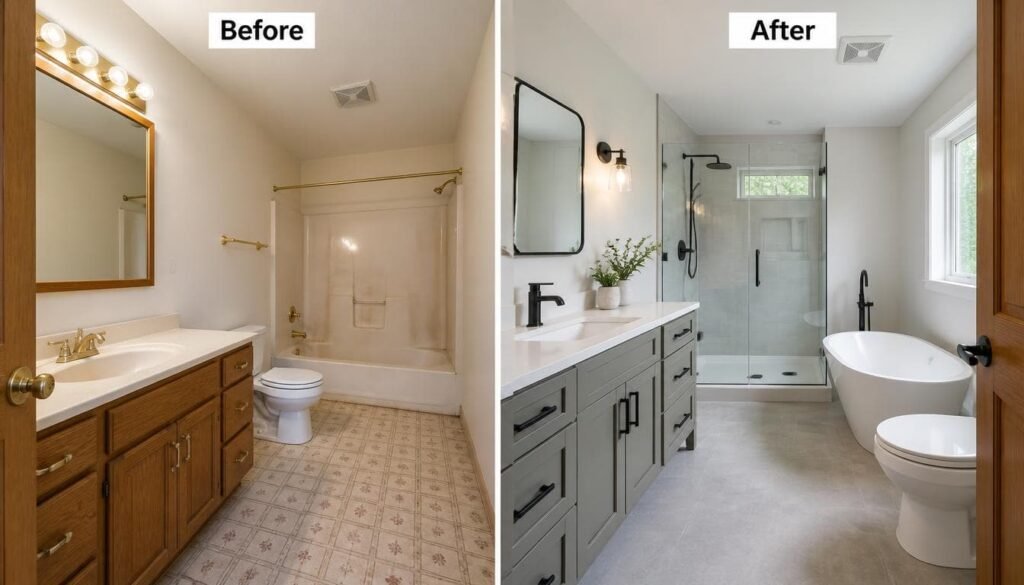
Shower, Tub, Vanity, Toilet & Fixture Replacement Costs
Replacing individual bathroom components is an effective way to update a space without undertaking a full-scale renovation. Whether you are upgrading a worn vanity, installing a modern toilet, or executing a shower remodel, understanding fixture-specific replacement costs helps build an accurate, realistic remodeling budget.
The table below provides a quick-reference overview of typical fixture replacement and upgrade projects, distinguishing approximate installed cost ranges and the primary drivers that influence final pricing.
| Fixture / Project Type | Typical Installed Cost Range | Primary Cost Factors |
|---|---|---|
| Shower Replacement | $3,000 – $10,000+ | Prefab unit vs. custom tile, glass enclosure type, valve upgrades |
| Bathtub Replacement | $2,500 – $6,500 | Alcove vs. freestanding tub, material weight, surround updates |
| Tub-to-Shower Conversion | $4,500 – $12,000+ | Demolition, drain/plumbing relocation, waterproofing, custom tiling |
| Vanity Replacement | $600 – $3,500+ | Cabinet size, stock vs. semi-custom construction, drawer configuration |
| Vanity + Countertop | $1,200 – $5,500+ | Quartz/granite slab material, integrated sinks, custom fabrication |
| Toilet Replacement | $300 – $1,200 | Standard two-piece vs. smart/comfort-height models, flange repairs |
| Sink Replacement | $250 – $900 | Drop-in, undermount, pedestal, or vessel configuration |
| Bathroom Faucet | $150 – $600+ | Finish quality, valve complexity, widespread vs. centerset design |
| Mirror & Medicine Cabinet | $150 – $800 | Framed decorative mirror vs. recessed lighted medicine cabinet |
| Bathroom Accessories Set | $100 – $400 | Towel bars, toilet paper holders, robe hooks, matching hardware finishes |
Note: Figures reflect approximate U.S. planning ranges for professional installation. Actual costs vary based on geographic location, brand selections, and existing structural conditions.
Shower Replacement Cost
Shower replacement expenses depend heavily on construction scope. A straightforward swap using a prefabricated acrylic or fiberglass shower unit is relatively cost-effective. Conversely, constructing a custom tiled walk-in shower with mud-set pans, frameless glass enclosures, and multi-head thermostatic valves demands intensive labor and premium waterproofing materials, increasing total costs significantly.
Bathtub Replacement Cost
Replacing a standard alcove bathtub within its existing footprint keeps labor straightforward. However, upgrading to a heavy cast-iron freestanding soaking tub or a deep whirlpool model often requires reinforcing floor joists and modifying supply lines, which adds to the overall project expense.
Tub-to-Shower Conversion Cost
Converting an old bathtub into a modern walk-in shower is a high-demand project that involves extensive labor. Beyond removing the heavy tub and hauling away debris, contractors must reconfigure drain locations, install specialized shower pan waterproofing, construct new wall surrounds or tile assemblies, and fit a custom glass door.
Bathroom Vanity and Countertop Replacement Cost
Vanity replacement costs scale with cabinetry tier and surface materials. Stock modular vanities provide affordable storage, while semi-custom and custom-built cabinetry allow tailored sizing and specialized interior configurations. Countertop choices—ranging from solid-surface laminate to engineered quartz and natural granite slabs—further dictate the final investment.
Toilet Replacement Cost
Standard two-piece toilets represent budget-friendly options, whereas one-piece, comfort-height, dual-flush, or advanced smart toilets command higher product prices. Replacing a toilet is quick when utilizing existing floor flanges, but discovering rotted subflooring or needing to relocate the waste pipe significantly increases installation labor.
Sink and Faucet Replacement Cost
Bathroom sink installation varies by style, from simple drop-in basins to undermount models requiring precise countertop cutouts and artistic vessel sinks sitting atop the vanity. Faucet upgrades range from basic centerset models to high-end wall-mounted or widespread fixtures featuring specialty finishes like brushed brass or matte black.
Mirrors, Medicine Cabinets and Bathroom Accessories
Finishing touches like decorative mirrors, recessed medicine cabinets, towel bars, robe hooks, and toilet paper holders complete a bathroom's aesthetic. Selecting matching hardware finishes across all accessories ensures a cohesive design without driving up major structural expenses.
Keeping the Existing Layout Can Lower Fixture Replacement Costs
One of the most effective ways to manage fixture replacement expenses is maintaining your current plumbing layout. Keeping toilets, sinks, showers, and tubs in their original footprints avoids the need to break concrete slabs, open wall studs, or reroute complex drain and supply lines. Relocating fixtures introduces substantial demolition, framing, and plumbing labor overhead.
Fixture Replacement vs. Full Bathroom Remodel
Choosing between individual fixture upgrades and a comprehensive renovation depends on the condition of your space. Replacing one or two worn fixtures makes sense when surrounding surfaces, waterproofing, and underlying plumbing remain in good condition. However, if multiple systems are outdated, flooring is failing, or you want to alter the overall room flow, a full bathroom remodel is typically a more practical, unified investment.
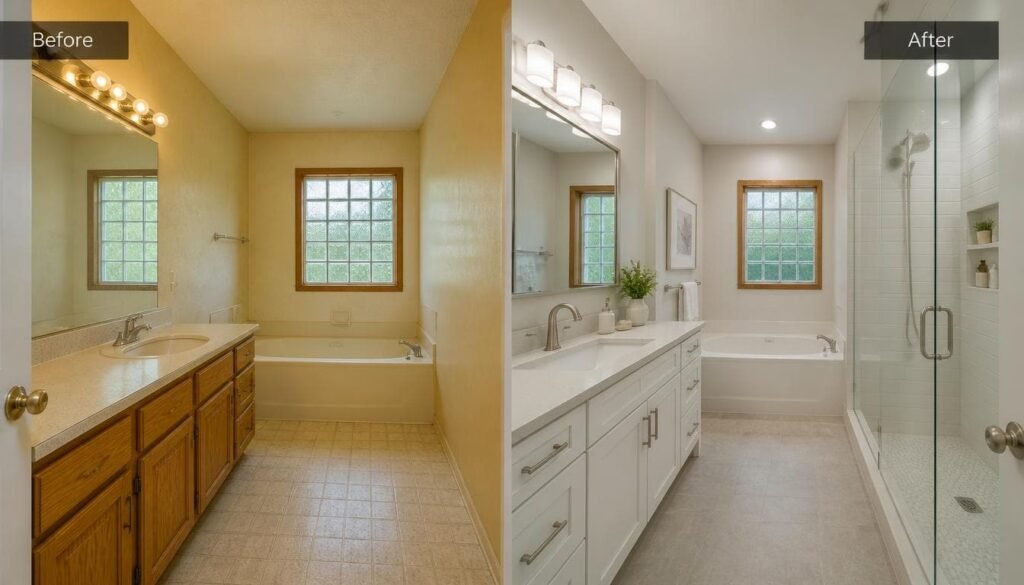
Small Bathroom Remodel Cost
The total small bathroom remodel cost can range widely depending on whether the project involves a simple cosmetic refresh, a partial update, or a complete structural renovation. While compact spaces feature limited square footage, planning a small bathroom renovation requires balancing smart spatial design with fixed professional labor and trade requirements.
Actual project costs vary based on geographic region, existing plumbing conditions, selected fixture tiers, and whether walls or layouts require reconfiguration. The overview below highlights typical spending levels across different small bathroom renovation scopes:
| Project Level | Typical Cost Range | Typical Scope & Features |
|---|---|---|
| Cosmetic Refresh | $1,500 – $3,500 | New paint, lighting, vanity hardware, mirrors, and faucet updates. |
| Partial Remodel | $3,500 – $8,000 | Vanity replacement, new flooring, toilet swap, and minor tile touch-ups. |
| Full Small Bathroom Remodel | $7,000 – $15,000+ | Complete gut demolition, new shower/tub surround, vanity, flooring, and tile work. |
| High-End Custom Remodel | $15,000 – $25,000+ | Custom cabinetry, quartz counters, frameless glass shower, premium tile, and upgraded plumbing. |
Note: Figures represent approximate U.S. planning ranges for professional installations. Actual totals fluctuate depending on regional labor markets and material choices.
Why Small Bathrooms Can Still Be Expensive
A common misconception is that a compact footprint automatically translates to a cheap renovation. In reality, many remodeling expenses are fixed or semi-fixed rather than strictly proportional to square footage. A small bathroom or powder room still requires core professional trades, municipal permits, waterproofing membranes, demolition labor, and debris disposal. Hiring a licensed plumber or electrician costs the same hourly rate whether they are working in a sprawling master bath or a 35-square-foot half bathroom.
Small Bathroom Remodel Cost by Project Scope
The scope of work directly dictates your financial investment when evaluating a small bathroom renovation:
- Keeping the Existing Layout: Retaining original toilet, sink, and shower footprints keeps labor and plumbing rough-in expenses to a minimum.
- Partial Fixture Swaps: Replacing individual items like a vanity or toilet provides an instant visual update without opening up wall cavities or subfloors.
- Complete Room Rebuild: Down-to-studs gut renovations address outdated waterproofing, mold remediation, and aged wiring, yielding a higher upfront cost but long-term reliability.
Small Bathroom Remodel Cost by Finish Level
Material selections heavily influence your small bathroom remodel budget:
Standard / Budget-Friendly Finishes
Utilizes stock modular vanities, durable luxury vinyl flooring, standard ceramic tile, and chrome fixtures. Perfect for controlling costs in guest or rental properties.
Premium & Custom Finishes
Features semi-custom or custom cabinetry, engineered quartz slabs, intricate porcelain or natural stone tile work, and designer matte-black or brushed-brass hardware.
Small Bathroom Layout Changes and Plumbing Costs
Reconfiguring the spatial flow of a small bathroom introduces significant labor overhead. Moving toilets, relocating shower drains, or shifting sink supply lines requires breaking through concrete slabs or cutting into floor joists. Whenever possible, keeping plumbing fixtures near their original locations remains the most cost-effective approach for a small bathroom remodel.
Small Bathroom Storage and Space-Saving Upgrades
Maximizing utility in a compact room without expanding its physical footprint relies on clever design choices:
- Wall-Mounted Vanities: Floating vanities expose more floor area, creating an optical illusion of a larger, more open room.
- Recessed Medicine Cabinets: Utilizing wall cavities for storage keeps toiletries organized without protruding into walking space.
- Shower Niches & Floating Shelves: Eliminates bulky shower caddies and utilizes vertical wall space efficiently.
- Pocket Doors: Replaces standard swing doors with sliding options to reclaim valuable interior floor space.
Small Bathroom Remodel Cost-Saving Ideas
Homeowners looking to manage their small bathroom renovation budget can adopt several strategic practices:
- Refinish Instead of Replace: Resurface existing cast-iron tubs or solid cabinet boxes rather than buying brand-new units.
- Choose Standard Sizes: Selecting standard prefabricated shower bases and vanity dimensions avoids costly custom fabrication fees.
- Strategic Tile Placement: Use budget-friendly field tiles for broad areas and reserve expensive decorative tiles for a small accent backsplash or shower niche.
- Build a Contingency Fund: Set aside 10 to 15 percent of your total budget to cover hidden surprises like water damage behind old shower walls.
Small Bathroom Remodel Budget Checklist
A thorough budget for a small bathroom remodel should account for all required components:
- Demolition and debris disposal
- Plumbing rough-ins and fixture connections
- Electrical wiring, lighting, and ventilation fans
- Waterproofing systems and cement backer boards
- Flooring and wall tile materials
- Vanity, countertop, and sink assembly
- Toilet and shower or tub fixtures
- Paint, trim, mirrors, and hardware accessories
- Permits and contractor overhead
- Emergency contingency reserve
Primary Bathroom Remodel Cost
How much does a primary bathroom remodel cost? For most homeowners, this investment ranges widely from $10,000 for a moderate update to $35,000 or more for an upscale luxury retreat. Primary bathrooms, sometimes still called master bathrooms, are typically larger and feature more complex systems than guest baths or powder rooms.
These figures serve as planning estimates rather than guaranteed quotes. Actual expenses depend on geographic location, overall bathroom size, layout configurations, material selections, specialized labor, plumbing rough-ins, and electrical upgrades. The breakdown below highlights typical spending levels across different project tiers:
| Project Level | Typical Cost Range | Scope & Primary Features |
|---|---|---|
| Cosmetic Refresh | $3,000 – $8,000 | New paint, mirrors, light fixtures, vanity hardware, and faucets. |
| Partial Remodel | $8,000 – $18,000 | Vanity replacement, countertop upgrade, flooring swap, and fixture updates. |
| Full Primary Bathroom Remodel | $18,000 – $35,000 | Gut demolition, walk-in shower conversion, double vanity, tile, and plumbing updates. |
| Upscale / Luxury Ensuite Remodel | $35,000 – $65,000+ | Custom cabinetry, premium stone, frameless glass shower, freestanding tub, and heated floors. |
Note: Estimates reflect U.S. planning averages for professional remodeling projects. Regional labor rates and material brand tiers heavily influence final costs.
Why Primary Bathroom Remodels Cost More
A primary bathroom remodel cost is generally higher than secondary bathroom updates because these spaces incorporate expanded square footage, double vanity stations, separate tubs and showers, extensive tile work, multiple lighting zones, and complex plumbing configurations. Greater size alone does not dictate expenses; the density, grade, and volume of integrated features drive the overall investment.
Primary Bathroom Remodel Cost by Project Scope
The extent of demolition and structural change dictates financial planning:
- Cosmetic Refresh: Surface-level updates that preserve existing layouts, flooring, and core fixtures while changing aesthetics.
- Partial Primary Bathroom Remodel: Upgrading key functional elements like vanity structures or flooring while keeping framing and major plumbing untouched.
- Full Primary Bathroom Remodel: Comprehensive down-to-studs overhauls that modernize waterproofing, electrical circuits, and layout ergonomics.
- Luxury Ensuite Remodel: High-end transformations featuring bespoke woodworking, smart home integrations, custom spa showers, and premium stone surfaces.
Primary Bathroom Remodel Cost by Finish Level
Material choices directly alter a master bathroom remodel cost, scaling from functional basics to luxury selections:
Standard / Mid-Range Finishes
Uses stock or semi-custom vanities, solid-surface or quartz countertops, standard ceramic or porcelain tile, and reliable brand-name fixtures.
Premium / Luxury Finishes
Features custom cabinetry, exotic natural stone slabs, large-format or handmade tiles, multi-head smart shower systems, and radiant floor heating.
Double Vanities, Showers, Tubs and Other Major Features
Primary bathrooms often showcase luxury centerpieces that shape the budget. Installing a double vanity requires dual sink plumbing and extra countertop fabrication. Creating an expansive walk-in shower with multiple showerheads, body sprays, custom benches, and heavy frameless glass enclosures introduces specialized labor and material overhead. Similarly, incorporating a freestanding soaking tub alongside a separate shower expands both spatial requirements and fixture expenditures.
Primary Bathroom Layout Changes and Plumbing
Altering where fixtures sit inside a primary bathroom significantly raises expenses. Moving toilets, shifting shower drains, or relocating double vanity plumbing requires cutting concrete slabs or opening floor joists to run new supply and waste lines. Maintaining the existing layout serves as an effective way to control your primary bathroom renovation cost.
Primary Bathroom Remodel Cost by Size
Spatial dimensions interact directly with feature density in a primary bathroom. Compact primary ensuite spaces (under 60 square feet) restrict layout flexibility but require fewer materials. Average primary baths (60 to 100 square feet) comfortably accommodate standard double vanities and combination tubs. Large or luxury spa-style primary bathrooms (exceeding 100 square feet) multiply tile coverage, lighting requirements, and labor durations.
Primary Bathroom vs. Guest Bathroom Remodeling Cost
While guest bathrooms and powder rooms focus primarily on basic guest utility and compact footprints, a primary bathroom functions as a heavily used daily living suite. Primary bathrooms feature more fixtures, larger square footage, more complex mechanical systems, and higher-grade finish requirements, making a primary bathroom remodel a more extensive investment than a guest bath update.
Ways to Control a Primary Bathroom Remodel Budget
Strategic decisions help manage spending on a primary bathroom renovation:
- Preserve Plumbing Layouts: Keep vanities, tubs, and toilets in their original locations to avoid heavy plumbing relocation fees.
- Prioritize High-Impact Upgrades: Allocate budget toward surfaces you touch and see daily, such as countertops and shower tile.
- Select Finishes Strategically: Use affordable field tiles for broad expanses and save expensive decorative stones for focal accent bands.
- Establish a Contingency Fund: Set aside 10 to 15 percent of your total budget to handle unexpected behind-the-wall repairs.
Primary Bathroom Remodel Budget Checklist
A structured checklist ensures all components are accounted for in your financial plan:
- Demolition and debris hauling
- Plumbing rough-ins and fixture installations
- Electrical wiring, lighting circuits, and ventilation fans
- Waterproofing systems and cement backer board
- Framing and structural adjustments
- Double vanity cabinetry and countertops
- Sinks and bathroom faucets
- Toilet or bidet fixture
- Freestanding or alcove bathtub
- Walk-in shower base, valves, and glass enclosure
- Flooring and wall tile materials
- Mirrors, medicine cabinets, and hardware accessories
- Paint, trim, and wall finishes
- Municipal permits and contractor overhead
- Emergency contingency reserve
Bathroom Remodel Cost Factors: What Affects Your Budget?
When planning a renovation, understanding the core bathroom remodel cost factors helps explain why two bathrooms of identical square footage can result in vastly different project budgets. Remodeling expenses depend far more on technical scope, mechanical layout, and structural complexity than on floor area alone.
The overview cards below highlight the primary variables that drive your final bathroom remodeling budget up or down:
1. Project Scope
The difference between a simple surface refresh and a complete down-to-studs structural gut renovation fundamentally alters labor and material allocations.
2. Bathroom Size
While floor area dictates material volume—such as tile coverage and paint—size is only one component of overall project complexity and cost.
3. Layout Changes
Shifting the physical positions of plumbing fixtures increases demolition, framing, subfloor repair, and pipe rerouting requirements.
4. Plumbing Systems
Upgrading supply lines, drain configurations, mixing valves, or addressing aged, corroded plumbing adds specialized labor hours.
5. Electrical Requirements
Adding dedicated circuits, GFCI outlets, modern lighting zones, or high-performance ventilation fans impacts electrical labor.
6. Materials & Finishes
Product selections across cabinetry, slab countertops, flooring, and hardware tiers create substantial variances in total expenses.
7. Fixture Selections
High-end smart toilets, frameless shower enclosures, multi-head shower valves, and specialty sinks carry higher upfront product costs.
8. Labor Complexity
Intricate tile patterns, multi-trade coordination, custom carpentry, and challenging architectural angles increase specialized labor fees.
9. Waterproofing Quality
Installing robust wet-area shower membranes and cement backer boards is critical for preventing long-term water damage.
10. Demolition & Disposal
The labor required to tear out heavy tile beds, old cast-iron tubs, and cabinets, alongside debris hauling fees, affects initial line items.
11. Hidden Conditions
Uncovering concealed water damage, rotted subflooring, or outdated wiring behind walls requires immediate remediation and repair.
12. Permits & Codes
Municipal building permits, architectural plan reviews, and mandatory local code inspections add administrative overhead.
13. Accessibility Upgrades
Integrating curbless showers, grab bars, widening clearances, and comfort-height fixtures influences specialized installation requirements.
14. Geographic Location
Regional labor markets, contractor demand, local cost of living, and material transportation expenses create geographic price variations.
15. Customization Level
Custom-built cabinetry, bespoke glasswork, non-standard sizing, and unique artisanal finishes require specialized fabrication.
What Usually Has the Biggest Impact on Cost?
While every home improvement project is unique, certain variables consistently exert the strongest leverage over your final bathroom remodeling budget. Altering the plumbing layout, undertaking full-gut demolition, executing complex wet-area tile work, and uncovering hidden structural damage typically drive the most substantial cost shifts. Conversely, keeping fixtures in their original footprints and selecting standard-size materials helps keep expenditures predictable.
Fixed Costs vs. Variable Costs
Understanding how expenses behave is vital for financial planning. Fixed or semi-fixed costs—such as contractor setup, minimum trade mobilization fees, municipal permits, and debris disposal—must be paid regardless of whether you are updating a small powder room or a spacious primary bath. Variable costs, on the other hand, scale directly with your selections, such as total square footage of tile, linear feet of countertop, and fixture quality tiers. This distinction explains why doubling a room's size does not automatically double the total remodeling invoice.
What Can Make a Bathroom Remodel More Expensive?
Certain conditions and choices can quickly inflate a project's financial requirement:
- Relocating toilets, showers, or sink drain lines across the room
- Uncovering structural rot, mold, or deteriorated subflooring during demolition
- Installing intricate custom tile layouts like intricate mosaics or large-format slabs
- Selecting luxury smart fixtures, digital shower controls, or custom furniture vanities
- Working within tight architectural constraints or difficult home access points
- Failing to establish a clear scope of work before construction begins
What Can Help Keep Bathroom Remodeling Costs Under Control?
Homeowners can manage their financial commitments effectively by implementing sensible strategies:
- Maintain existing plumbing fixture locations to avoid major rough-in labor
- Finalize all material and fixture selections prior to starting demolition
- Utilize standard-sized prefabricated components to bypass expensive custom fabrication
- Reserve intricate, expensive tile for small focal areas rather than entire wall expanses
- Maintain a dedicated 10 to 15 percent contingency reserve for unexpected structural findings
A Bathroom Remodel Budget Should Account for More Than Materials
A common budgeting pitfall is tallying up the price of tiles, vanities, and faucets while ignoring the surrounding ecosystem of project expenses. A realistic financial plan must account for professional labor, rough-in plumbing and electrical components, waterproofing membranes, municipal permits, delivery logistics, waste disposal, and safety contingencies. Accounting for these elements upfront ensures a smoother, fully funded remodeling experience.
Considering Window Changes During Your Bathroom Remodel?
Window replacement or modifications can add to a bathroom remodeling budget, especially when changing window size, improving ventilation, or upgrading an older window. Use the Calculante Window Replacement Cost Calculator to estimate potential costs and account for this work in your overall project budget.
Bathroom Remodel vs. Bathroom Renovation: What's the Difference?
When planning an upcoming home improvement project, homeowners often search for the exact difference between a bathroom remodel vs renovation. While everyday conversation uses these terms interchangeably, understanding their technical distinctions can help clarify your project's scope, timeline, and financial requirements.
In general construction practice, terminology can vary by contractor and region, but a practical functional distinction exists between updating an existing space versus altering its layout and structural systems. The side-by-side comparison below outlines how these two concepts generally diverge:
Bathroom Renovation
- Refreshes, repairs, and updates an existing room
- Retains the basic spatial layout and footprint
- Involves surface finish changes and aesthetic upgrades
- Replaces fixtures in their original locations
- Focuses on restoration, maintenance, and modernization
- Generally features less structural or layout disruption
Bathroom Remodel
- Substantially changes or completely alters the space
- Relocates plumbing lines, drains, or fixtures
- Involves heavy demolition and spatial reconfiguration
- Changes shower and bathtub configurations
- Alters walls, layout architecture, or electrical wiring
- Involves a broader, deeper room reconstruction
Bathroom Renovation Examples
A bathroom renovation centers on breathing new life into an existing room without altering where major elements sit. Typical renovation tasks include repainting walls, swapping vanity faucets, replacing an old toilet in its exact original location, installing a fresh vanity cabinet, laying new flooring, hanging decorative mirrors, changing light fixtures, updating cabinet hardware, refreshing tile grout, and adding new bathroom accessories.
Bathroom Remodel Examples
A bathroom remodel alters how the room functions and flows. Common remodeling projects include shifting a toilet to a different wall, relocating a shower drain, expanding a tub footprint, executing a complete tub-to-shower conversion, opening up or removing non-load-bearing walls, running entirely new supply lines, adding sophisticated multi-zone electrical circuits, and performing a total down-to-studs reconstruction.
When Does a Bathroom Project Become a Remodel?
There is no single universal rule or legal threshold that instantly converts a renovation into a remodel. However, several practical indicators signal that your project has crossed into a true bathroom remodel: fixture locations are actively shifting, plumbing is being rerouted beneath the floor or through wall studs, major demolition is underway, shower and tub layouts are changing, or multiple core building systems are being reconfigured simultaneously.
Bathroom Remodel vs. Renovation Cost
Understanding how scope impacts cost is essential. Generally, a straightforward bathroom renovation cost remains lower because it preserves existing infrastructure, requiring less specialized labor and avoiding major rough-in work. Conversely, a comprehensive bathroom remodel cost tends to be higher due to extensive demolition, plumbing rerouting, framing adjustments, and multi-trade coordination. However, terminology alone does not determine price; a high-end luxury renovation featuring custom materials can easily surpass the price tag of a modest layout remodel.
Which Is Better: Remodeling or Renovating a Bathroom?
The ideal choice depends entirely on your home's current condition and your personal goals. If your existing layout works efficiently, fixtures are simply outdated, and plumbing is sound, a renovation provides an effective, budget-friendly refresh. If your current room feels cramped, lacks storage, features poor traffic flow, or requires layout modifications to meet your lifestyle needs, a full remodel is usually the better long-term investment.
Questions to Ask Before Planning a Bathroom Remodel or Renovation
Evaluating a few key questions will help you define your project accurately before contacting professionals or purchasing materials:
- Do I like the current spatial layout, or does traffic flow feel awkward?
- Do the existing plumbing locations comfortably serve my daily routine?
- Are the underlying walls, subfloor, and wet-area waterproofing in sound condition?
- Am I simply swapping surface fixtures, or do I need entirely new configurations?
- Does the room lack adequate storage, lighting, or ventilation?
- Are accessibility upgrades or safety features required for family members?
- What features represent essential functional needs versus cosmetic desires?
- Am I planning a quick short-term aesthetic update or a permanent layout improvement?
Why the Terms Can Be Confusing
Terminology often becomes blurred because contractors, real estate listings, online cost calculators, and home improvement media frequently use “remodel” and “renovation” interchangeably. Focusing on the actual scope of work rather than the specific label ensures you communicate your exact project requirements clearly.
How to Save Money on a Bathroom Remodel
Finding realistic ways on how to save money on a bathroom remodel without sacrificing quality, functionality, or safety is a top priority for most homeowners. The most effective cost reductions come from controlling project scope, preserving existing plumbing layouts, choosing materials strategically, and eliminating unnecessary custom fabrication.
Effective budgeting focuses on smart allocation rather than cutting unsafe corners. True economy means investing in vital protections like waterproofing and framing while economizing on surface finishes, hardware, and design details that can be updated over time.
Keep the Existing Bathroom Layout
Retaining the original physical arrangement of your toilet, shower, bathtub, vanity, and main drain lines is one of the single most powerful cost-saving decisions you can make. Moving major plumbing fixtures requires cutting into concrete slabs or opening floor joists, rerouting supply lines, and increasing demolition and structural repair labor. Keeping your layout intact preserves a manageable budget.
Choose Where to Spend and Where to Save
Balancing high-end selections with budget-friendly alternatives keeps overall spending under control without lowering project quality:
Where to Prioritize Quality
- Wet-area waterproofing membranes
- Core plumbing valves and mixing hardware
- Licensed electrical work and GFCI circuits
- Professional tile and shower installation
- Durable, slip-resistant flooring options
Where to Save Strategically
- Decorative cabinet hardware and pulls
- Framed mirrors instead of custom glass walls
- Standard finish bathroom accessories
- Readily available stock lighting fixtures
- Non-custom vanity storage solutions
Use Standard-Size Fixtures and Materials
Opting for standard dimensions—such as standard vanity widths, conventional bathtub lengths, standard shower bases, and readily available tile sizes—substantially lowers manufacturing costs, eliminates custom fabrication fees, and shortens product lead times.
Limit Plumbing Relocation
If layout adjustments are necessary, limit changes to minor shifts rather than a complete room overhaul. Keeping vanity plumbing, toilet flanges, and shower drains near their original wet walls avoids expensive rough-in labor, complex code inspections, and extensive subfloor repairs.
Be Strategic With Tile
Tile coverage and labor can quickly escalate a budget. You can achieve a high-end look while lowering costs by utilizing premium tile as a striking focal accent band inside the shower niche or vanity backsplash, while pairing it with clean, affordable field tile for larger open wall spaces. Avoid overly intricate custom mosaic patterns that dramatically increase specialized installation time.
Consider Refinishing Before Replacing
When existing components are structurally sound but look dated, surface refinishing or professional reglazing can offer a cost-effective alternative to total replacement. This approach works well for solid cast-iron tubs or certain structurally sound vanities, though it is not recommended for components showing advanced water damage or physical deterioration.
Choose Stock or Semi-Custom Options
Custom cabinetry and bespoke woodwork require specialized craftsmanship and command top-tier pricing. Selecting stock or high-quality semi-custom vanities and storage cabinets provides modern aesthetics, excellent storage efficiency, and reliable durability at a fraction of custom costs.
Plan the Entire Project Before Demolition
Indecision during construction is a primary driver of unexpected expenses. Finalize all fixture selections, tile choices, layout drawings, and paint colors before demolition begins to prevent expensive change orders, material waste, contractor delays, and re-work fees.
Compare Product Prices, Not Just Contractor Prices
Homeowners can actively reduce material expenditures by shopping around and comparing prices on major components such as vanities, faucets, flooring, and lighting fixtures. Ensure selected products match your technical specifications and do not interfere with professional installation requirements.
Get a Detailed Project Scope
Review contractor estimates line-by-line to understand exactly what is included. Verify whether the quote covers demolition debris disposal, municipal permits, delivery logistics, protective surface masking, and cleanup. Clear upfront scopes prevent surprise invoices down the road.
Keep a Contingency Budget
Older bathrooms often conceal hidden challenges once walls and subfloors are opened. Setting aside a dedicated financial reserve—typically 10 to 15 percent of your overall budget—ensures you are prepared to handle unexpected subfloor repairs, mold remediation, or outdated wiring safely without stalling the project.
Do Not Cut Corners on Waterproofing
Bathroom Remodeling Mistakes That Can Increase Costs
Avoiding common missteps keeps a project aligned with financial goals:
- Changing the project scope repeatedly during active construction
- Starting demolition before all finish materials are purchased and on-site
- Relocating plumbing lines unnecessarily across the room
- Failing to account for debris disposal and municipal permit fees
- Underestimating the technical difficulty of complex tile patterns
- Purchasing fixtures that do not fit existing spatial dimensions
- Ignoring proper ventilation and moisture control requirements
A Smart Bathroom Remodeling Budget Strategy
Executing an affordable and successful renovation requires a structured game plan:
- Define your absolute must-have functional requirements.
- Preserve existing plumbing layouts to minimize rough-in labor.
- Establish a realistic, comprehensive materials and fixture budget.
- Prioritize high-durability products in high-risk moisture zones.
- Choose strategic areas to upgrade and smart areas to save.
- Account for labor, demolition, permits, and waste disposal.
- Maintain a contingency reserve for unexpected conditions.
- Finalize all decisions prior to starting construction.
Get Free Bathroom Remodeling Quotes
Get free quotes from trusted local bathroom remodeling professionals.
Frequently Asked Questions
Get answers to common questions about bathroom remodeling costs, including project size, labor, materials, fixtures, cost per square foot, and ways to plan a realistic bathroom renovation budget.
No matching questions found
Try searching for terms like "cost", "labor", "shower", "small bathroom", or "square foot".
A bathroom remodel can cost anywhere from several thousand dollars for a basic update to tens of thousands for a full or high-end renovation. The final price depends on bathroom size, project scope, materials, fixtures, labor, plumbing changes, and the condition of the existing space.
A cosmetic update may involve paint, hardware, lighting, or a vanity, while a full remodel can include demolition, new tile, plumbing, electrical work, a shower or tub replacement, flooring, and other major improvements.
Bathroom remodeling costs can be expressed on a per-square-foot basis, but there is no single national price that applies to every project. A rough planning range may span from about $100 to $300 or more per square foot, depending on finishes, labor, layout changes, fixtures, and project complexity.
For example, a $20,000 remodel of a 100-square-foot bathroom works out to $200 per square foot. However, fixed costs such as demolition, plumbing, permits, and fixture installation can make smaller bathrooms appear more expensive per square foot.
A small bathroom remodel can range from several thousand dollars for a simple cosmetic update to well over $10,000 for a more complete renovation. Small bathrooms still require labor, fixtures, waterproofing, plumbing, and finishing work, so their total cost does not necessarily decrease in direct proportion to floor area.
A compact 5-by-8-foot bathroom, for example, may require many of the same trades as a larger bathroom. Keeping the existing layout and choosing standard-size fixtures can help control costs.
The biggest factors affecting bathroom remodeling cost are project scope, bathroom size, labor rates, materials, fixtures, plumbing changes, electrical work, tile and waterproofing, demolition, permits, and hidden damage. The existing bathroom's condition and whether the layout changes can also have a major effect on the final budget.
- Project size and scope
- Materials and finish level
- Labor and local contractor rates
- Plumbing or electrical relocation
- Demolition and disposal
- Water damage or structural repairs
- Permits and project requirements
Bathroom remodeling labor can represent a substantial portion of the total project budget, often because several specialized trades may be involved. Plumbing, electrical work, demolition, tile installation, waterproofing, drywall, painting, flooring, and fixture installation can all contribute to labor costs depending on the project's scope.
Labor prices vary considerably by location and project complexity. Moving plumbing, installing intricate tile patterns, repairing damaged surfaces, or rebuilding a shower generally requires more labor than a simple cosmetic update.
The cost to replace a bathroom fixture varies widely by the product, installation requirements, finish level, and whether plumbing must be changed. A basic toilet or vanity replacement can be relatively straightforward, while a new shower, tub, or tub-to-shower conversion can become significantly more expensive when demolition, waterproofing, plumbing, tile, and specialized installation are required.
When comparing fixture prices, consider the total installed cost rather than the purchase price alone. Installation, removal, disposal, plumbing connections, surrounding finishes, and unexpected repairs can all affect the final amount.
Bathroom remodeling material costs depend on the size of the room, selected products, finish quality, and amount of tile, flooring, cabinetry, countertops, and other materials required. Basic ceramic tile and stock fixtures may keep material costs lower, while natural stone, custom cabinetry, premium fixtures, and specialty finishes can increase the budget substantially.
Homeowners should compare both material price and installation requirements. A product with a low purchase price may still cost more overall if it requires specialized installation, additional preparation, or extensive cutting and fitting.
The most expensive parts of a bathroom remodel are often labor, shower or tub work, plumbing changes, tile installation, cabinetry or vanities, and major demolition or repairs. The exact cost depends on the bathroom and project scope, but relocating plumbing or rebuilding a shower can substantially increase both labor and material requirements.
- Extensive shower or tub work
- Plumbing relocation
- Complex tile installation
- Custom cabinetry or vanities
- Major demolition
- Water or structural damage repairs
A primary bathroom remodel can range from a moderate renovation to a major luxury project, with costs often reaching well into the tens of thousands of dollars. Primary bathrooms tend to cost more when they are larger, contain multiple fixtures, use premium finishes, or involve custom showers, tubs, cabinetry, plumbing relocation, or extensive electrical work.
A primary bathroom with a simple layout and standard fixtures can cost considerably less than one with a custom walk-in shower, freestanding tub, double vanity, heated flooring, premium tile, or major layout changes.
Yes, bathroom size can affect remodeling cost because larger spaces generally require more flooring, tile, wall finishes, and other materials. However, size is only one part of the budget. A small bathroom can still be expensive if it requires extensive plumbing, custom work, demolition, waterproofing, or high-end fixtures.
This is why multiplying bathroom square footage by a single cost-per-square-foot number may not produce a reliable project estimate. The scope and complexity of the remodel matter as much as the room's dimensions.
The best ways to save money on a bathroom remodel are to keep the existing layout when practical, avoid unnecessary plumbing relocation, choose standard-size fixtures, compare material prices, limit custom work, and finalize decisions before demolition begins. Smart savings should reduce unnecessary scope rather than compromise waterproofing, electrical safety, plumbing, or structural repairs.
- Keep plumbing fixtures in their existing locations when practical.
- Use stock or semi-custom products instead of unnecessary custom work.
- Choose premium materials selectively rather than everywhere.
- Plan the complete project before demolition.
- Maintain a contingency reserve for unexpected repairs.
Your bathroom remodel budget should be based on the room's size, existing condition, desired scope, materials, fixtures, labor, and whether plumbing or electrical systems need to change. Start with a realistic project estimate, then include a contingency reserve for hidden conditions so unexpected repairs do not derail the renovation.
A useful budget should account for more than visible products. Include demolition, disposal, labor, installation, permits where required, waterproofing, delivery, and possible repairs when determining how much you can comfortably spend.
A bathroom remodel can take anywhere from several days for a limited cosmetic update to several weeks or longer for a full renovation. The timeline depends on demolition, product availability, plumbing and electrical work, tile installation, inspections, waterproofing, drying or curing times, and whether unexpected problems are discovered.
Custom products and special-order materials can also extend the schedule. Finalizing selections before work begins can help reduce delays and change orders during construction.
Replacing a bathtub and converting a tub to a shower can have very different costs, so neither option is always cheaper. A straightforward replacement using existing plumbing may be relatively simple, while a tub-to-shower conversion can require demolition, waterproofing, a new shower base, wall surrounds, doors, plumbing adjustments, and additional finishing work.
The existing bathroom layout and the type of shower system selected are important when comparing the two options. A simple prefabricated shower may have different installation requirements from a fully tiled custom shower.
A bathroom renovation generally refers to updating, repairing, or improving an existing bathroom while retaining much of its basic layout, while a remodel may involve more substantial changes to the room. However, contractors and homeowners often use the terms interchangeably, so the actual scope of work matters more than the label.
Replacing finishes, fixtures, flooring, or paint may be considered a renovation, while moving plumbing, changing the layout, rebuilding a shower, or substantially reconstructing the room is more commonly described as remodeling.
Whether you need a bathroom remodeling permit depends on your local building department and the type of work being performed. Cosmetic updates may not require a permit in some locations, while plumbing, electrical, structural, or layout changes commonly have additional requirements. Always verify local rules before starting construction.
Permit requirements can vary by city, county, state, and project scope. If a contractor is handling the work, ask which permits are required and whether permit fees and inspections are included in the estimate.
Unexpected bathroom remodeling costs can come from hidden water damage, damaged subfloors, deteriorated plumbing, outdated wiring, structural problems, mold-related repairs, code requirements, or conditions discovered after walls and flooring are opened. Product changes and project delays can also increase the budget beyond the original estimate.
Older bathrooms deserve particular attention because problems may remain hidden behind walls, under flooring, or around showers and tubs. Maintaining a contingency reserve can help absorb legitimate repairs without forcing major design compromises.
A bathroom remodel cost calculator estimates a project's potential budget by combining information such as bathroom size, project scope, materials, fixtures, labor, and other selected options. Enter the details that best match your planned renovation, then use the resulting estimate as a starting point for comparing project scenarios and organizing your budget.
Calculator results are planning estimates rather than guaranteed contractor quotes. Actual costs can vary because of local labor rates, product availability, site conditions, permits, hidden damage, project complexity, and the specific contractor performing the work.
Our Trusted Sources
Our bathroom remodeling cost information, building standards, plumbing guidance, fixture recommendations, energy-efficiency information, and renovation insights are informed by trusted government agencies, building-code organizations, professional construction associations, and established industry resources.
Accurate bathroom remodeling estimates depend on more than material prices alone. Plumbing requirements, ventilation, waterproofing, fixture efficiency, labor, permits, building codes, and local construction requirements can all affect the scope and cost of a project. By referencing recognized government agencies, building-code organizations, professional associations, and established industry resources, we aim to provide practical bathroom remodeling information based on real-world residential construction standards.
Related Calculators
Planning a bathroom remodel often involves more than estimating renovation costs. Use these related Calculante calculators to estimate tile, paint, window replacement, and concrete project costs for other parts of your home improvement plan.